
We were first introduced to composting toilets in our Kimberley Karavan, which had a Nature’s Head toilet fitted. We quickly became fans: no flush water or chemical additives, less frequent emptying of the solids, and no unpleasant odour from the solids when the toilet was used as intended.
So, when we had the opportunity to test a portable Compo Closet Cuddy in 2023, we were keen to give it a go. We were preparing for a remote desert trip in our new Tvan Lightning and wanted to find out whether a portable composting toilet could work just as well for touring.
Three years on, we’ve used the Cuddy on the road and at home, tried different composting mediums and updated some of its components. Here’s what we’ve learned.
What makes it different from a chemical toilet?
The Cuddy separates liquid and solid waste. The liquids collect in a removable bottle, while the solids are mixed with a carbon-rich composting medium in a separate bin.
A small 12-volt fan helps move air through the toilet and manage moisture and odour. The system uses no flush water or chemical additives, and the solids bin generally needs emptying every couple of weeks as opposed to every couple of days with a chemical toilet.
The Cuddy begins the composting process, but the material in the bin is not finished compost. It still needs to be disposed of responsibly, according to the rules where you’re travelling.
First impressions and how it works
From the outside, the Cuddy has the familiar shape of a portable toilet, but with a smart finish and squared-off lines. The recessed agitator handle sits flush with the front of the unit.
Lift the lid and the first thing you notice is the large opening. It gives you more room than the narrow opening of many portable toilets, which we found made the Cuddy more comfortable to use.
Two horizontal sliders separate the bowl from the solids bin. They meet in the middle to help prevent liquid from entering the solids compartment. The urine diverter works best when everyone takes a little care with positioning. In our experience, it wasn’t difficult to use, and sitting down made night-time visits straightforward.
Lifting the seat reveals the two waste compartments. At the front is the 6.5-litre liquid bottle. An indicator light warns when it’s time to empty it. At the rear is the removable solids bin, with an agitator that mixes the contents with the composting medium.
The Cuddy’s current listed capacities are a 6.5-litre liquid bottle and a 14.7-litre solids bin. Compo Closet gives a general guide of two to three weeks’ full-time use for two people, though actual time between emptying depends on use and conditions. compocloset.com.au
Our first trip
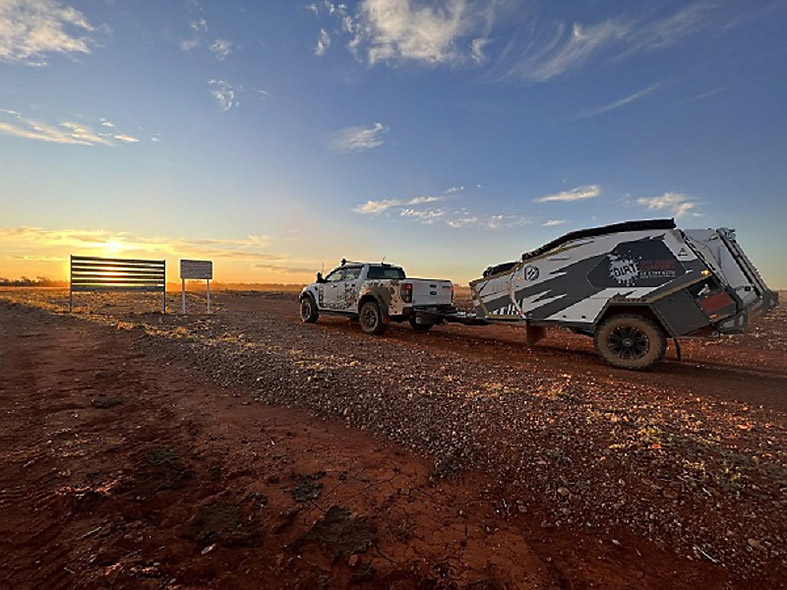
We took the Cuddy across the Anne Beadell Highway, including some very rough corrugations. As a precaution, we emptied the liquid bottle daily during that trip.
We kept toilet paper out of the solids bin to save space. After use, we collected it separately for disposal. If you prefer to put paper in the solids bin, Compo Closet recommends keeping it to a minimum because it takes longer to break down and fills the bin more quickly.
Composting medium
The first medium we tried was a compressed, peat-based product that needed to be broken up with water before use. It worked, but we found it could become moist, depending on how often the toilet was used and the nature of the deposits. We added more medium a couple of times during our 17-day trip.
The key is to avoid making the medium too wet. Add enough to cover the lower part of the agitator arms, then adjust as you learn how the toilet performs for your style of use.
We later tried Pet Hemp. It is a dry product and, in our experience, helped keep the contents drier. It did the job well during a second test, when we kept the Cuddy in our home’s second bathroom. One person used it almost daily for eight weeks, and we didn’t notice unpleasant odours.
The Cuddy also proved useful on a business trip. Three blokes were sharing an apartment with one bathroom, so having a backup toilet came in handy during the morning rush.
For touring, the compressed peat-based product was easier to pack. We found it worked better to prepare it in the mixing bag than to try to break it up in the solids bin.
Using the Cuddy
For liquid waste, make sure the sliders are closed before use. We used a natural eucalyptus-oil spray on the urine diverter afterwards to help keep it fresh. I recommend testing it on your Cuddy in a small area prior to wider use.
For solid waste, open the sliders, use the toilet, then close them when you’re finished. The sliders can be operated while seated, which is useful if you need to use the toilet for both purposes in one visit.
Afterwards, pull out the agitator handle and turn it gently a couple of times to mix the contents. A newer solids-bin cover helps reduce compost spray during agitation, and the updated agitator design improves mixing.
Ventilation and odour
The Cuddy has different ventilation options, including a carbon filter and fan, and an external venting arrangement. On our first trip, we vented the toilet through a gap in the Tvan ensuite door using a ribbed hose. We put a piece of stocking over the outlet to keep insects out.
Over the years, we tried several setups, including internal and external venting. We later added a square carbon-filter unit with a HEPA filter. In our installation, it gives us the external venting we wanted without having to reconfigure the fan between travelling and camping.
In our experience, the solids stayed low-odour when we managed the composting medium and ventilation. The liquid bottle still needs regular attention, especially in warm weather or with frequent use. We use Bosisto’s Eucalypt Spray after each use to keep the urine tract fresh.
Storage in the Tvan
When travelling, we kept the Cuddy in its travel bag on the step at the base of the bed, with a blanket between it and the surrounding paintwork.
The Tvan tent stored in the hatch held the toilet in place and compressed the gear stored at the base of the bed. At camp, we moved the Cuddy onto the tent floor and connected it to 12-volt power.
Emptying and disposal
The liquid bottle is simple to remove and empty. Lift the lid, take out the bottle, unscrew the corner cap and pour the contents into a suitable disposal point. Out in the bush, this can be away from the campsite.
The solids bin has a handle for carrying. Depending on where you are, disposal may involve sealing the contents in suitable bags for rubbish disposal or burying them where local rules allow. Always check the requirements of the park or land manager, including any rules about burial depth, distance from water and campsites, and whether bagged waste can go in general rubbish. Don’t assume that a compostable bag can be buried or discarded anywhere.
The Cuddy starts the composting process; the contents need further time to finish composting. Compo Closet’s guidance says to follow local regulations and, if adding the material to a compost pile, allow several months for it to finish breaking down. compocloset.com.au
We kept toilet paper separate from the solids. Depending on where you are, it may be possible to bury it, or you may need to pack it out. Burning it should only be considered where fires are permitted and safe. Check local advice before choosing a disposal method.
What it costs
At the time of writing, the Cuddy retails for $1,795. The travel bag is $220. Check the current Compo Closet range for up-to-date pricing and availability.
Three years on
Since our first trip, we’ve updated our Cuddy with features introduced on newer models:
- A revised solids bin and agitator arms
- A solids-bin cover to reduce spray while mixing
- A square carbon-filter unit with a HEPA filter, set up for external venting in our installation
We also made a small base to raise the toilet a few inches. That made it more comfortable for Anita, whose legs can be a little unsteady.
Our verdict
We’ve found the Cuddy practical for remote touring and useful at home. The biggest benefit for us is going longer between emptying the solids bin. The liquid bottle fills sooner and needs more frequent attention, while the time between solids-bin emptying depends on how many people use it and how often.
The Cuddy also changes how you manage waste. You don’t need flush water or chemical additives, but you do need to keep an eye on the liquid bottle, manage the composting medium and follow local disposal rules.
We’re happy with the Cuddy and can’t see ourselves returning to a chemical toilet for our own touring. We’ll keep experimenting with composting mediums to see what works best for us.
See the Cuddy at The Dirt
We were impressed enough with the Cuddy to become an authorised reseller. Back in 2023, we were the first authorised reseller in Australia!
You can inspect the Cuddy, Cuddy Lite and S1 at our Mount Barker showroom:
The Dirt Off Road Campers
26 Light Crescent
Mount Barker SA 5251
We can also arrange delivery to your door through Compo Closet at no cost. See the ink below.
New release: the S1 Dry Flush toilet
Compo Closet has also released the S1 Dry Flush toilet. Unlike the Cuddy, the S1 doesn’t use composting medium. It heat-seals solid waste into special bags and uses the same urine diverter as the Cuddy, which helps reduce bag use.
The S1 retails for $2,795. An S1 Dry Flush upgrade kit is also available to convert a Cuddy; the listed price is $850. Check current availability and pricing with Compo Closet before ordering.