There is something special about exploring Australia’s deserts—following in the footsteps of early explorers across vast, remote country that very few people ever experience. The combination of red sand, endless horizons, and historical landmarks has a way of drawing you in, while also reminding you just how harsh and unforgiving this environment can be.
Trips like this also highlight why having the right touring setup matters. In remote country where conditions can change quickly and support is limited, a well-prepared vehicle and a capable off-road camper become less about convenience and more about confidence—giving you the ability to travel further, safely, and independently.
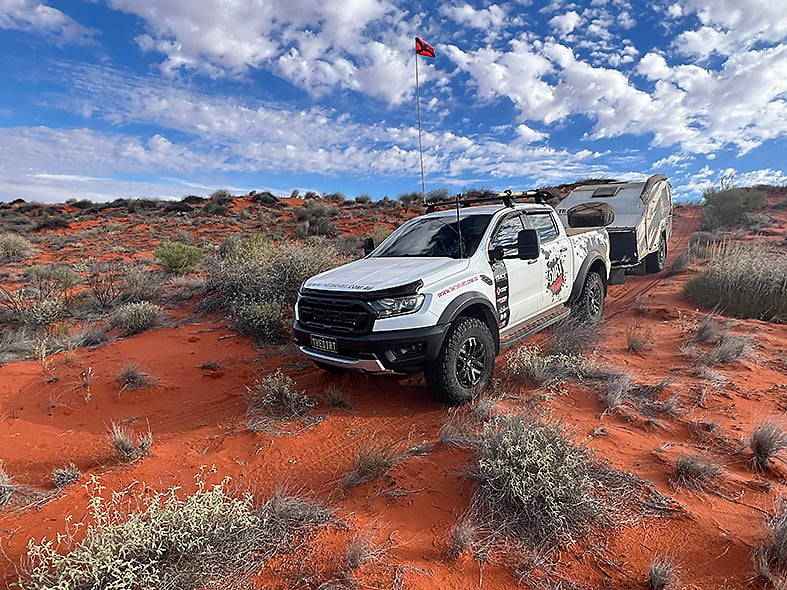
For many, trips like this are the reason they start looking into more capable touring setups—something that can handle corrugations, sand driving, and extended time off-grid without adding unnecessary complexity.
Back in 2023, we followed in the footsteps of Len Beadell, the Australian surveyor and road builder responsible for thousands of kilometres of outback roads, including the Gunbarrel Highway, Anne Beadell Highway, Sandy Blight Junction Road, and the Gary Highway—some of Australia’s most isolated desert touring tracks.
After exploring desert regions across South Australia, Western Australia, and the Northern Territory, we were looking for the next challenge. The Madigan Line, across the northern Simpson Desert, quickly rose to the top of the list.
Cecil Madigan’s 1939 Expedition
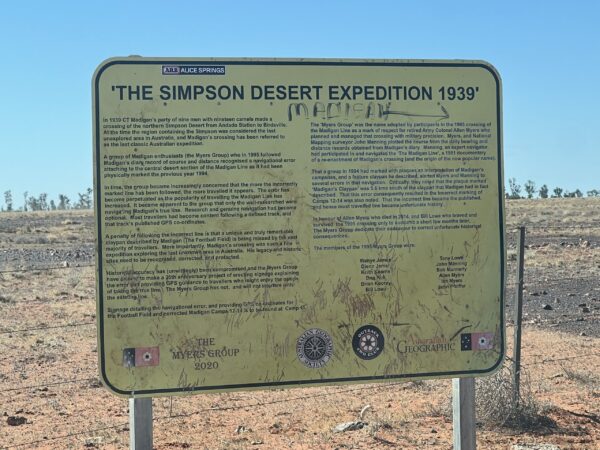
The Madigan Line is named after Cecil Madigan, a geologist and explorer who led a scientific expedition across the Simpson Desert in 1939.
At the time, the Simpson Desert was largely unmapped and poorly understood. Most crossings skirted the edges rather than traversing the interior, and there was growing interest in documenting its geology, ecology, and geography.
Madigan’s team travelled west to east from Old Andado Station, near Mt Dare Hotel, toward Birdsville using camels rather than vehicles. Along the way, Madigan established a series of survey points now known as the Madigan Camps, numbered 1 – 25.
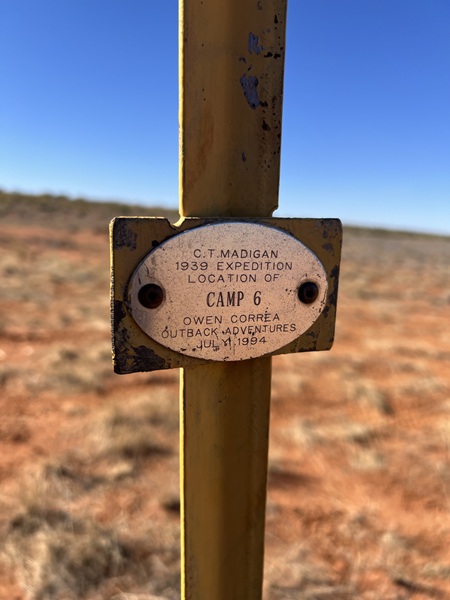
These camps still form the backbone of navigation along the route today, although some are on private property and are inaccessible. Madigan later documented the journey in Crossing the Dead Heart, a book that remains a valuable reference point for desert travel.
The Madigan Line Route
The modern Madigan Line is not a graded road. It is a conceptual route following Madigan’s camps across the northern Simpson Desert.
Compared to other Simpson Desert crossings, it is:
- less travelled
- more remote
- more dependent on self-sufficiency and navigation
- limited in bailout options
Routes like the Madigan Line quickly highlight the setups that are well matched to the conditions—and just as importantly, those that are not. Having a touring combination that remains stable, tracks well, and is easy to manage in remote environments can make a significant difference to both safety and enjoyment.
Our Convoy and Why the Tvan Suited the Trip
Travelling with friends always adds something extra to these trips. There is someone to share the experience with, assist with mechanical issues if needed, and provide another set of eyes both on and off the track.
Our convoy included:
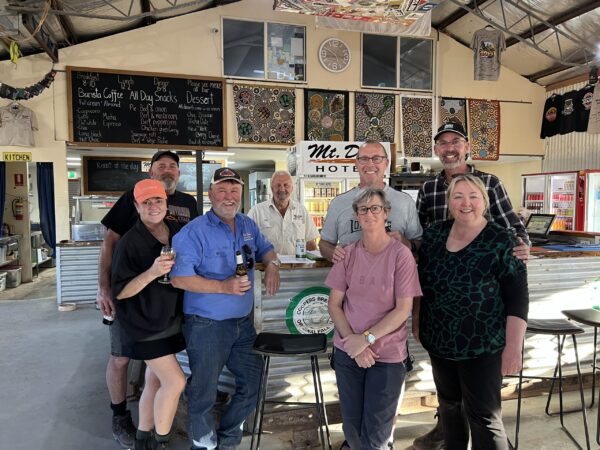
- Helen and Mark in a Prado and Mk5 Tvan
- Dave in a Navara tray back and rooftop tent
- Heath and Donna in a Hilux tray back and rooftop tent
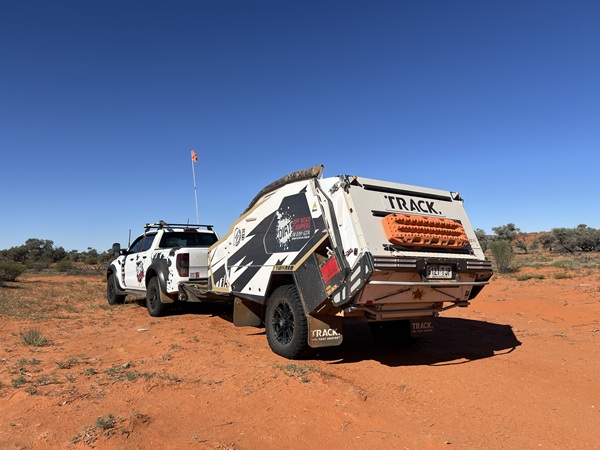
- Anita and Mike in a Ranger Raptor and Mk5 Tvan
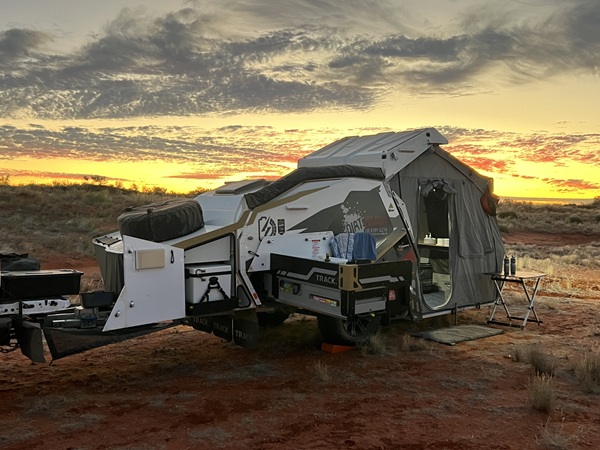
The Tvan is a compact off-road camper designed for extended remote touring. It is well regarded for its long-travel MC2 suspension, which is right at home in these conditions—soaking up corrugations and comfortably handling wombat holes up the dune face.
Ease of setup at the end of the day, without the complication of electric assistance, combined with protection from the elements thanks to its cocoon-like sleeping area, are key drawcards of the design philosophy. First launched in 2000, the Tvan has undergone more than two decades of refinement and has proven itself time and again within the off-road touring community.
If you are planning trips that go beyond sealed roads—whether that is the Simpson Desert or other remote routes—thinking carefully about your towing setup, storage, and campsite workflow becomes an important part of the overall experience.
Why Parks SA Does Not Recommend Most Trailers in the Desert
Parks SA do not recommend trailers in desert environments, and for good reason. Not all trailers are suited to remote terrain, and recoveries from isolated locations can be complex and expensive.
We have seen examples of this firsthand. Trailers not designed for these conditions can quickly become a liability when suspension or structural components are pushed beyond their limits.
The Tvan, however, was designed specifically with desert terrain in mind—a point reinforced through repeated outback and desert travel. With a long-standing heritage, compact footprint, and purpose-built suspension, it offers a level of capability and durability that aligns with the demands of remote touring, while still delivering the comfort needed for extended time away.
The Journey to the Madigan Line
With half our convoy travelling from central Victoria, we had a few days to spare, so we headed to one of our favourite regions: the Flinders Ranges. While we usually favour the four-wheel-drive section of Brachina East Campground in the national park, we had heard good things about Parachilna Gorge as a free camp area, so that became our target for the first night.
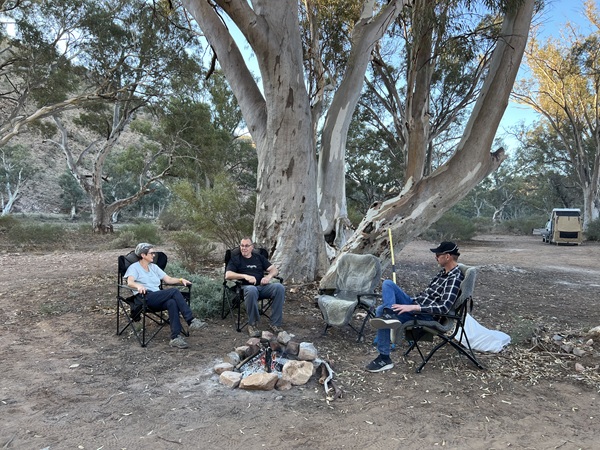
We met Mark and Helen along the way and stopped at the Parachilna Gorge area off the unsealed Blinman Road. A visit to the Prairie Hotel set the tone before we continued into the gorge itself. Dust hung in the air as we made our way up the track and eventually set up camp among shady gums.
A lesson learned early was that camps on the track are still exposed to noise and dust from passing traffic, even when set back from the road. The Parachilna Gorge Road is a busy thoroughfare servicing Blinman and beyond, so choosing a more secluded site can make a noticeable difference to comfort.
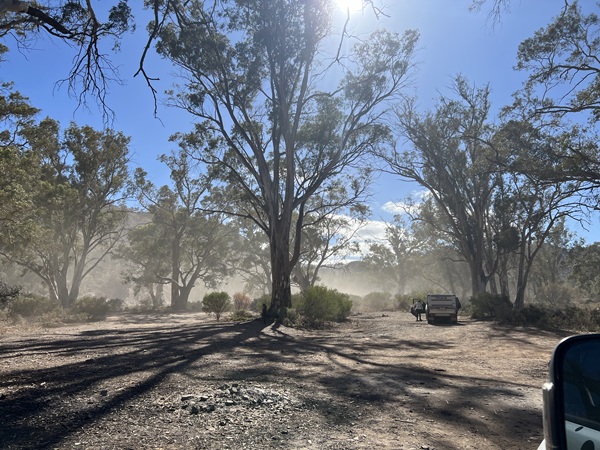
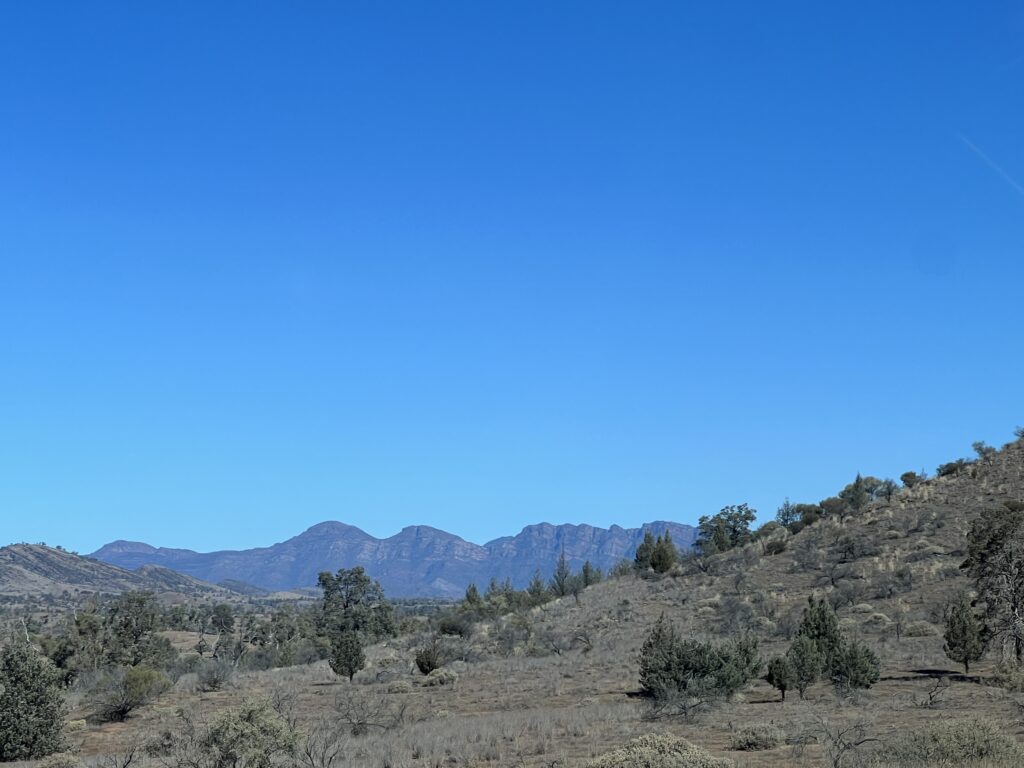
The following day we explored the area, taking the backroads to Blinman and driving the Brachina Gorge Geological Trail. It is one of the must-do drives in the region, along with Bunyeroo Valley and Moralana Scenic Drive—beautiful routes through creek beds and rocky escarpments.
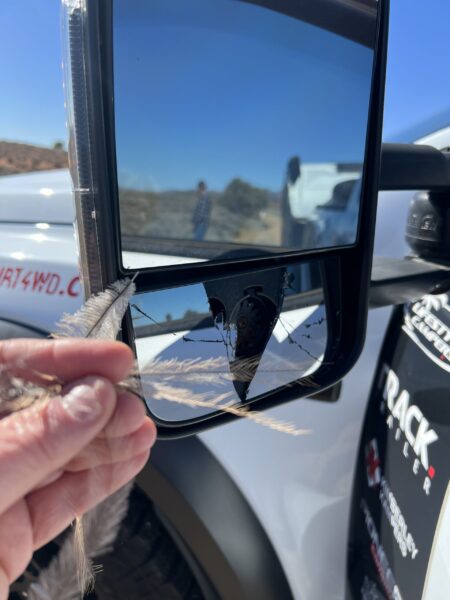
Back on the highway, we had our first wildlife encounter when an emu made a sudden dash across our path. The Clearview mirror took the hit, shattering the lower glass, while the Stone Stomper mesh provided some cushioning before the bird disappeared back into the scrub.
Overnight at Farina
We continued to Farina for the night. It is a beautiful campground with an honesty-box system and basic facilities including flushing toilets and donkey-fired hot showers.
Farina is a historic railway town south of Marree. Each year, volunteers spend months restoring the township and preserving its history. A key part of that effort is the underground working bakery, which helps fund much of the restoration work. It was not operating during our visit, as it runs seasonally, typically from May to July.
It is a quiet, atmospheric stop that reflects both the history of the region and the effort that has gone into preserving it.
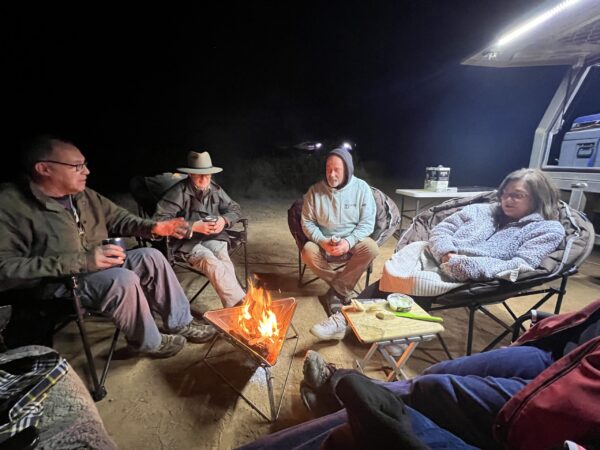
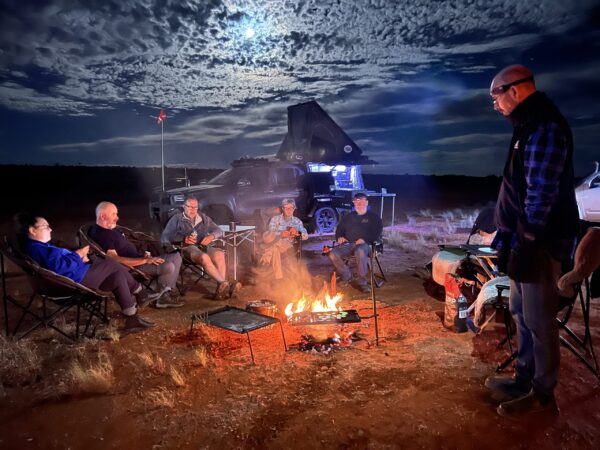
Before long, the remaining convoy members arrived. Introductions were made, a few drinks were shared around the campfire, and plans for the next day were discussed.
Oodnadatta Track to Algebuckina Bridge
From Marree, we followed the unsealed Oodnadatta Track alongside the Old Ghan Railway line. There are plenty of points of interest along the way, including Mutonia Sculpture Park, Lake Eyre South, Mound Springs Conservation Park, Coward Springs, and William Creek.
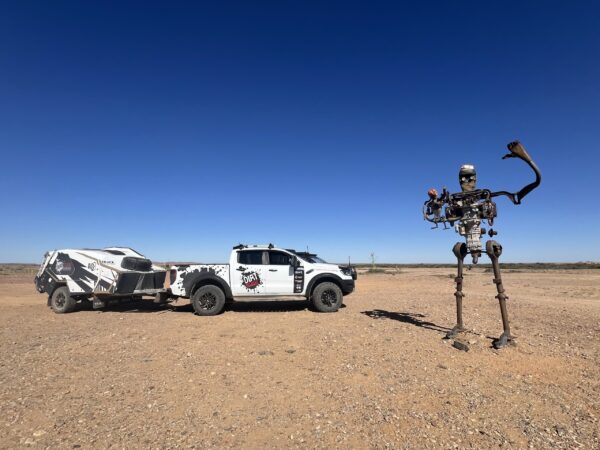
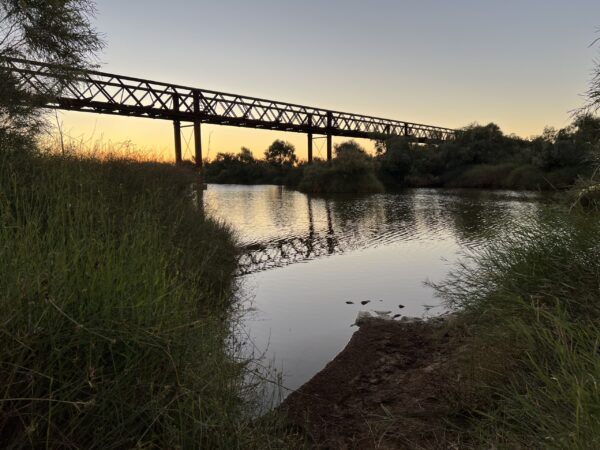
We camped overnight at Algebuckina Bridge, a former railway bridge on Allandale Station, arriving at dusk. By now we had settled into a simple routine: a quick Tvan setup, moving our Compo Closet Cuddy portable composting loo from the rear step into the tent, and then getting a campfire going to take the edge off the cold.
With the Tvan Lightning’s comforts, we were buffered by the overnight cool temperatures with electric blankets, a twin hob induction cooktop, and the diesel heater to pre-warm the camper before bed.
Travelling on unsealed roads, we maintained a steady pace in 4H for improved control over corrugations and loose surfaces. With a well-balanced towing setup, appropriate suspension tuning, and correct tyre pressures, the campers remained stable and composed over long stretches of rough terrain.
Many travellers underestimate how much difference the right setup makes once you are towing long distances on corrugations or soft sand. Small factors like suspension, weight distribution, and camper design all contribute to how the vehicle performs over the course of a trip like this.
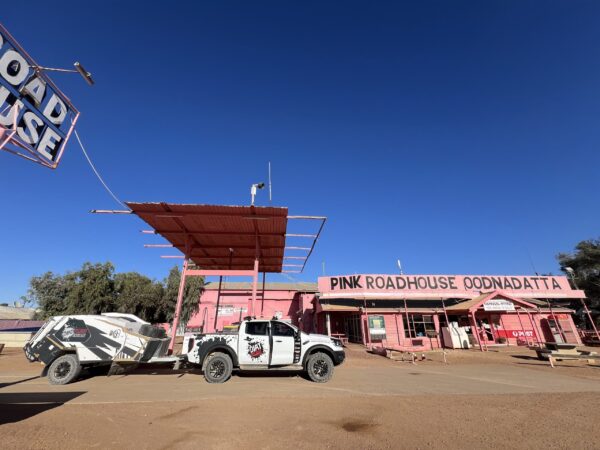
Next stop was Oodnadatta’s Pink Roadhouse for fuel and a bite to eat, followed by Dalhousie Springs for a soak in the thermal waters and a look around the ruins.
Mt Dare and Final Preparations
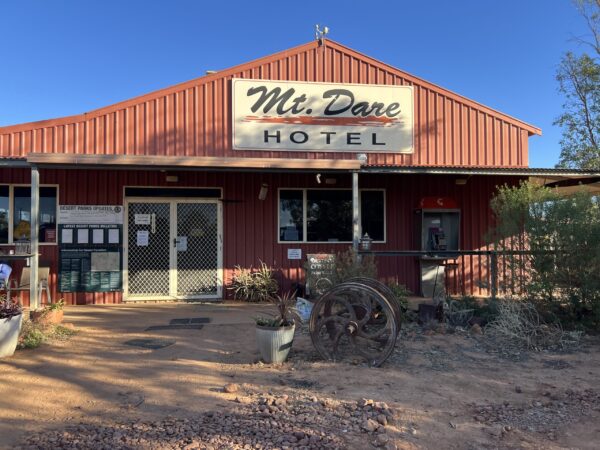
We then made our way to Mt Dare, an outback hub on the western fringe of the desert. It is a popular staging point for desert travellers, offering camping, hot showers, toilets, fuel, and the pub itself. Dinner that night set the scene for the desert crossing ahead.
By this stage, most travellers begin double-checking their setup, fuel range, and gear. For those considering similar travel, it is often worth speaking with someone who understands how different vehicle and camper combinations perform in these environments, particularly when towing through sand and corrugations.
That evening, the distant howl of dingoes reminded us just how remote the next stage would be.
Entering the Madigan Line
Our first stop was Old Andado Station, a historic property that now operates as both a museum and campground. Toilets and showers are available, although the generator needs to be running before water is supplied to the amenities block. The homestead itself is set up like a museum, with everyday artefacts from earlier desert life preserved in place. A large red dune in the background offers an early taste of what lies ahead.
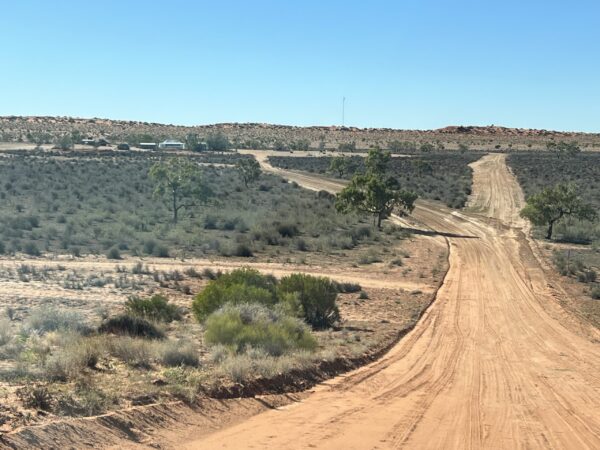
The start of the Madigan Line comes shortly after, near the Acacia Peuce Reserve—one of only three places in Australia where these rare trees can be seen. Navigation is tricky at first, with limited signage, but if you keep the reserve fence to your left and follow your GPS, the route becomes clearer.
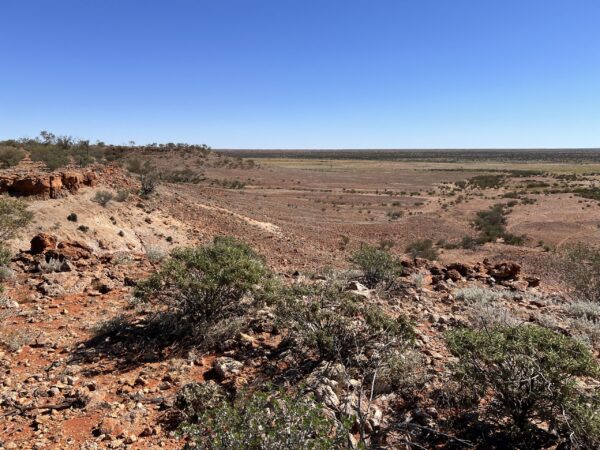
The landscape remains mostly flat until Marshalls Bluff, a slow, rocky climb that rewards you with panoramic views. Our planned campsite nearby did not look especially appealing, so we continued on to Camp 5.
One-Way Dunes: Camps 6 to 15
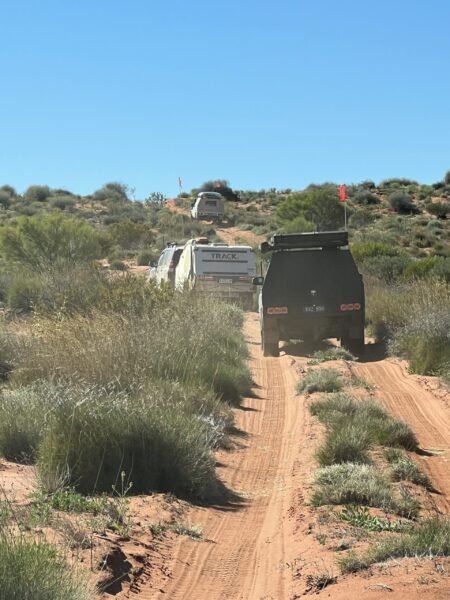
From Camp 6, the dunes become more challenging, which explains why the section through to Camp 15 is one-way only, running west to east. The backsides of many dunes were heavily scalloped, suggesting some travellers had ignored the regulations and driven the wrong way.
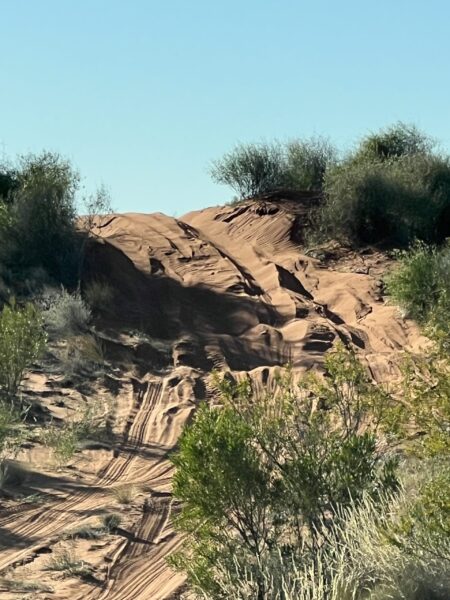
To keep progress easy, we were running tyre pressures of 12 psi front, 15 psi rear, and 12 psi in the camper. With traction control off, we used the rear locker where needed to keep the axle driving cleanly over the scalloped dunes.
With sensible driving and low pressures, we crossed every dune without issue, despite the added drag of the trailer.
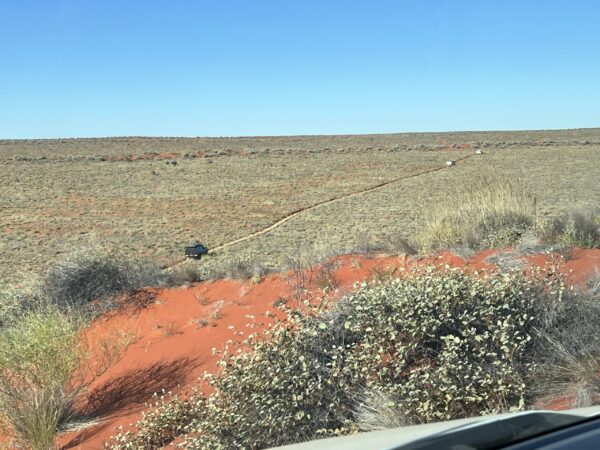
In sand driving, particularly when towing, the difference between a smooth crossing and a difficult one often comes down to setup. Tyre pressures, weight distribution, and suspension all contribute to how the rig behaves, but having a camper designed to track well behind the vehicle adds an extra layer of confidence through each dune.
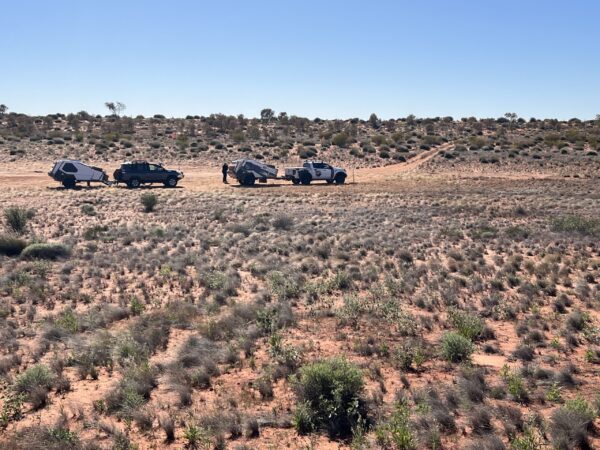
Dune conditions varied depending on recent traffic, with some sections chopped up and others relatively clean. Navigation around Camp 11 proved challenging, with several false tracks leading to dead ends before we eventually found the correct route off the main track toward the Football Field claypan.
Moments like this are a reminder that self-sufficiency matters in remote desert travel. A setup that is simple, reliable, and easy to manage in the field helps reduce stress when navigation becomes uncertain or conditions do not go to plan.
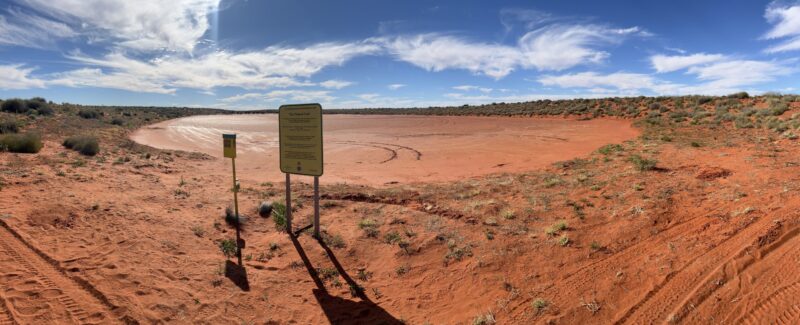
We spent some time at the claypan throwing the frisbee around with fly nets on, taking in the landscape before returning to the main route.
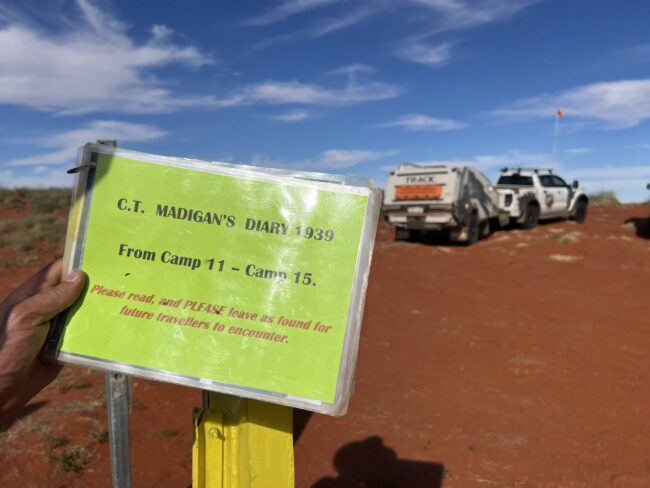
A Visitors Book is located here with laminated extracts from Madigan’s Diary – it makes interesting reading!
That evening we arrived at Camp 13, thoroughly spent after a long day, but the open space gave everyone room to spread out. The sunset was spectacular, and we climbed the dune at happy hour to take in the silence and isolation of the surrounding country.
Crossing Eastward to the Hay River Track
Approaching the Queensland border, the landscape remained much the same: big red dunes, green foliage, and remote desert country stretching out in every direction.
Vandals had removed another camp plaque, which was disappointing and difficult to understand given the effort required to reach such a remote place.
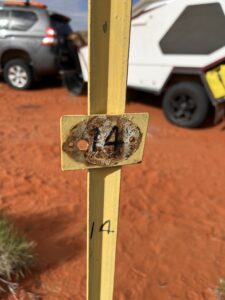
At Camp 15 we reached the Hay River Track, and from there the driving became easier as the route ran between the dunes.
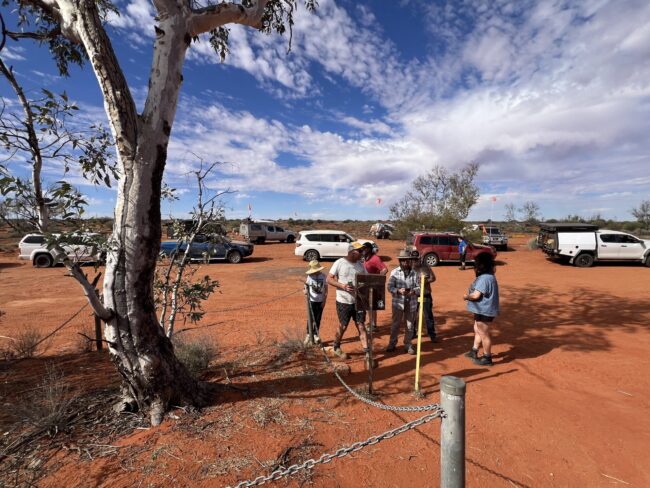
We continued to Camp 16, where Madigan’s blazed tree stands near the track junction to Adria Downs Station. The Adria Downs route had been closed for the previous month, so we used Starlink to call for an update and left a message. After waiting several hours without a return call, we gave up and continued down the Hay River Track toward Poeppel Corner.
Final Approach to Birdsville
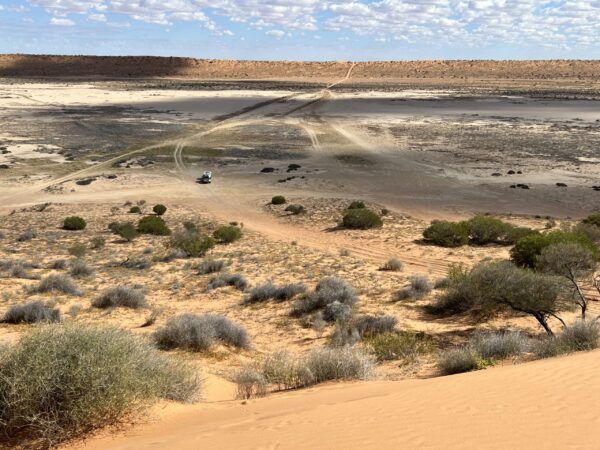
The final stage brought us to Big Red, the largest dune in the Simpson Desert. Several approaches lead to the crest, and we spent some time trying different lines to see what worked best.
By the time you reach Birdsville, most people reflect on their setup—what worked well, what could be improved, and whether their current combination is truly suited to the type of travel they want to do going forward.
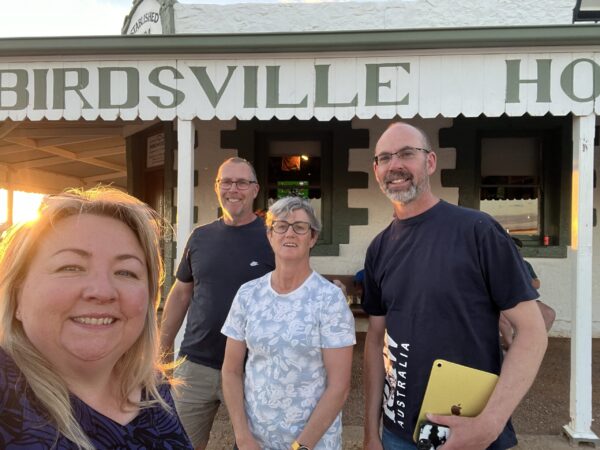
We finished in Birdsville with the familiar post-trip routine: a shower, a clean-up, and dinner at the pub.
Fuel Consumption: Ranger Raptor and Mk5 Tvan
For the journey, we carried approximately 220 litres of fuel with a Gen 1 Ranger Raptor and Mk5 Tvan combination.
Average fuel consumption:
- Highway: 13.5L/100km
- Unsealed roads: 16L/100km
- Mixed unsealed and sandy tracks: 17L/100km
- Dunes: 26–30L/100km
Careful planning around fuel range, water, and recovery gear is just as important as the vehicle and camper setup itself. When towing, factors like speed, load distribution, tyre pressures, and driving style all contribute to overall efficiency across different terrain types.
Madigan Line Permits
- No Desert Parks Pass required
- Camping at Dalhousie Springs: approximately $25 per night, including vehicle access fee
- Madigan Line access: Central Land Council permits apply and are free.
- Permission required for Adria Downs Station access to Camps 20–22.
Resources and Further Reading
If you are planning a similar trip, the following resources provide useful background on the Madigan Line, Simpson Desert travel, and our broader touring setup considerations.
Background and history
The 1939 Simpson Desert Expedition – Cecil Madigan – YouTube
Crossing the Dead Heart (Book) – Cecil T Madigan
Route information and travel context
Simpson Desert via the Madigan Line (Tvan Touring) – YouTube
SA Outback Roads
Related reading
Why We Chose the Mk6 Tvan for Our Next Desert Trip
This article explains how our experiences on the Anne Beadell Highway, Sandy Blight Junction, and Madigan Line influenced our setup decisions ahead of future travel along the Canning Stock Route and East Kimberley region.
What the Madigan Line Reinforced
Trips like the Madigan Line reinforce what matters most in remote touring—reliability, simplicity, and the ability to stay comfortable while remaining self-sufficient.
Completing the Madigan Line in the Mk5 Tvan, following our earlier trip along the Anne Beadell Highway and beyond, gave us a clear perspective on how our setup performs across extended remote travel. Corrugations, sand driving, and long distances between resupply points quickly highlight what works well—and what becomes more noticeable over time.
While the Tvan handled the conditions reliably throughout all trips, the experience also clarified a few areas we would look to refine for future travel, particularly as we move toward longer and more remote routes such as the Canning Stock Route and East Kimberley.
Trips like Madigan are not just about the route itself—they are also an opportunity to better understand how your vehicle and camper combination behave in real-world conditions. That perspective has strongly influenced how we have approached our next setup.
We have started documenting our Mk6 Tvan build and the considerations behind it, including comfort, protection, load management, and day-to-day usability over extended periods in remote environments.
If you’re in South Australia or the Northern Territory and are researching the Mk6 Tvan, feel free to reach out. Whether you’re planning a Big Lap, remote desert travel or simply exploring your options, get in touch We’re always happy to have a chat and help you work out what suits your style of travel.