Words by Mike Pavey | Photography by Anita Pavey • 12 minute read
Preparing for the Canning Stock Route starts long before the first sand dune. Join us as we prepare our Mk6 Tvan Murranji and Ford Everest Tremor for one of Australia’s most remote four-wheel drive adventures, sharing the planning, testing and lessons we’re learning before venturing into the deserts of Western Australia.
Every year, vehicles break down on the Canning Stock Route.
Rarely is it because the terrain is simply too difficult. More often, it’s the accumulation of small problems—an overloaded vehicle, unsuitable tyre pressures, poor fuel planning or equipment that wasn’t properly tested before leaving home or monitored during the journey.
Stretching almost 1,700 kilometres through the deserts of Western Australia, the Canning Stock Route (CSR) is one of Australia’s most iconic four-wheel drive adventures.
While the driving itself isn’t generally regarded as highly technical, its remoteness changes everything. Once you leave the bitumen behind, help can be hundreds of kilometres away and even minor issues can quickly become major setbacks.
For many four-wheel drive enthusiasts, the CSR is the ultimate bucket-list journey.
For Anita and me, it’s the culmination of years of travelling, learning and refining the way we prepare for remote-area adventures.
Our previous trips have taken us along the Anne Beadell Highway, Sandy Blight Junction Road and the Madigan Line. Each journey has taught us something—about our vehicles, our equipment and ourselves—and each has quietly shaped the decisions we’re now making for the CSR.
In our previous article, we explained why we chose a Mk6 Tvan Murranji for this trip. This article picks up where that one finished.
Rather than simply listing the accessories we’ve fitted, we want to share the thinking behind our preparation. Why we’ve chosen particular equipment. What we learned during our Border Track shakedown. What we’d do differently. And, perhaps most importantly, why we believe successful remote travel has less to do with buying more gear and far more to do with understanding, testing and refining the equipment you already have.
Because if there’s one lesson we’ve learned over the years, it’s this:
Preparation doesn’t guarantee you’ll avoid problems. It simply gives you the best chance of dealing with them when they arise.
Preparation Is About Reducing Consequences
One of the biggest misconceptions about remote travel is that success comes from having the biggest budget or the longest list of accessories.
Spend enough time on social media and it’s easy to believe you need portal axles, bigger tyres, or a monster Lithium battery system before you’re ready to tackle remote Australia.
Our experience has taught us something different.
Preparation isn’t about buying more equipment. It’s about reducing the consequences when something doesn’t go according to plan.
Mechanical failures, punctures, navigation errors, recovery situations and changing weather conditions are all part of remote-area travel. We can’t eliminate those risks, but we can do a great deal to reduce their impact.
For us, preparation focuses on three areas:
- Choosing the right camper.
- Building a capable and reliable tow vehicle.
- Travelling with experienced people who share the same approach to remote-area travel.
Everything else simply supports those three foundations.
Why We Chose the Mk6 Tvan Murranji
The Track Trailer Mk6 Tvan Murranji is already an exceptionally capable platform for remote-area touring, making it a natural choice for an expedition like the Canning Stock Route.
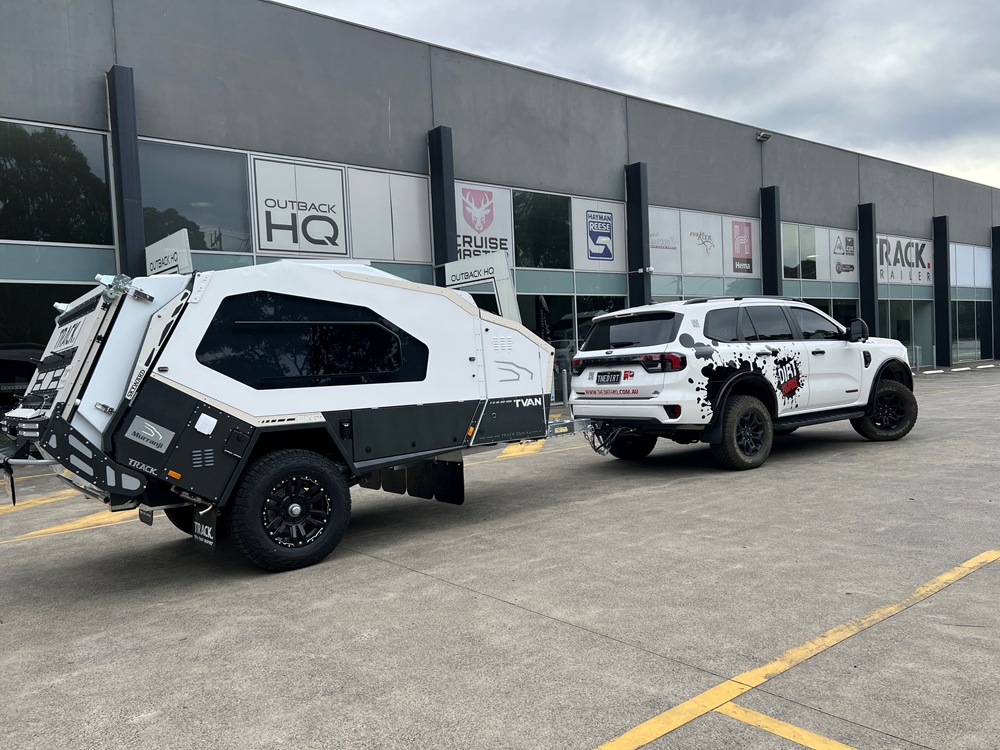
Coming from a 2023 Tvan Lightning, we already had a strong appreciation for the Tvan platform. It had taken us to some incredible places and performed exceptionally well, so choosing another Tvan wasn’t about starting again—it was about selecting the model that best suited the way we now travel.
Our previous Lightning featured a heavily upgraded electrical system built around induction cooking, and it proved just how capable an all-electric setup could be. For the Canning Stock Route, however, our priorities shifted. Water capacity, refrigeration, storage and overall self-sufficiency became more important than adding further electrical capability.
The Murranji builds on everything we already liked about the Tvan while adding features that make extended remote touring more comfortable and practical. Increased water capacity, the Skyward deck for quick access, larger opening side windows, extended under-bed drawers and a larger dual-zone fridge/freezer all contribute to making life easier when you’re spending weeks away from towns and caravan parks.
One thing we’ve learned over the years is that more options don’t necessarily make a better expedition camper. Every additional component adds cost, weight and complexity.
With that in mind, we deliberately focused on options that would improve safety, reliability, and day-to-day usability, rather than simply ticking every box on the order form.
Options We Selected
Our Mk6 Tvan has been optioned with:
- Matching wheels, tyres and offset to our Ford Everest Tremor
- Koni 88 shock absorbers (supplied by Atlas RV)
- Drawbar extension
- Redarc 2000W inverter
- Revolution Orange Band batteries
- Bosch Anti-Lock Braking System (ABS)
- 360W solar capacity
- Rear insect-screen canvas upgrade
- Stone Stomper
- Bushwrapz Paint Protection Film – Advance
- Narrowtrax Paint Protection
- Front Runner Braai spare-wheel BBQ plate
Each of these options was selected for a specific reason, and we’ll explore many of them in more detail throughout this series as we continue preparing for the Canning Stock Route.
Building an Expedition Vehicle – Our Ford Everest Tremor
The Mk6 Tvan may be our home for the journey, but the Ford Everest Tremor is the vehicle that has to carry us there and back again.
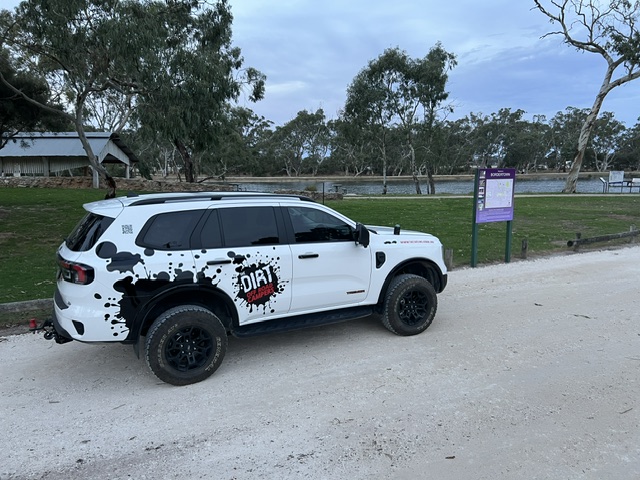
When we purchased the Everest, our objective wasn’t to build the most heavily modified touring vehicle. Instead, we wanted a reliable, comfortable and capable platform that could confidently tow the Tvan through some of Australia’s most remote country.
Every modification has been carefully considered against the same question that has guided our entire preparation:
Will this make us more capable, more reliable or better prepared?
If the answer was no, it didn’t make the list.
Our Everest now features an ARB suspension and GVM upgrade with BP-51 shock absorbers, air bags with in-cab adjustment, a long-range fuel tank, dual battery system, rear drawer storage, onboard air compressor with pressure control system and self-retracting hose reel, 12V oven, recovery equipment and communications systems suited to extended remote travel.
Just as importantly, we’ve resisted the temptation to modify components simply because aftermarket options exist. Wherever possible we’ve retained the excellent factory engineering, adding only those upgrades that genuinely improve capability, durability or practicality for the type of touring we enjoy.
Preparing for a journey like the Canning Stock Route isn’t about building the most impressive vehicle in the campground. It’s about building one that is dependable, well understood and proven before leaving the bitumen behind.
The Border Track shakedown reinforced that philosophy. While the vehicle performed exceptionally well, it also highlighted several areas—including suspension tuning, tyre pressures and Sand Mode operation—that we’ll continue refining before heading into the deserts of Western Australia.
Every Kilogram Has to Earn Its Place
Preparing for a remote expedition isn’t simply about fitting accessories—it’s also about deciding what not to take.
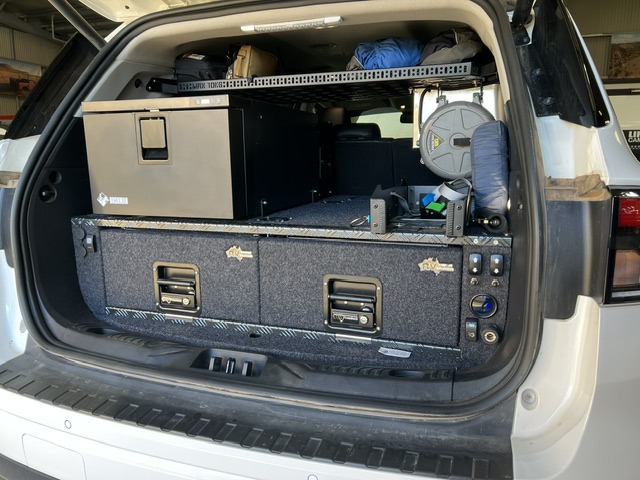
One of the biggest challenges when preparing for the Canning Stock Route is balancing self-sufficiency with vehicle weight.
Extra fuel, water, recovery gear, spare parts and food all increase your capability, but they also add weight. That weight affects fuel consumption, suspension performance, braking, tyre wear and how the vehicle behaves in soft sand.
Our goal wasn’t to fill every available storage compartment. It was to ensure every item had a logical place and a genuine purpose.
Frequently used equipment needed to be easy to access. Recovery gear had to be available without unpacking the vehicle. Heavy items were positioned as low as practical, while lighter, less frequently used gear could be stored higher or further back.
The Border Track shakedown confirmed that our packing system was largely successful. We could quickly find what we needed without unpacking half the vehicle, and by the end of the trip only a handful of small changes remained.
One of the biggest lessons came before we even left home. We’d originally planned to carry an additional 60 litres of diesel in three roof-mounted 20-litre poly containers. After trialling the mounting system, we weren’t completely satisfied with the restraint arrangement, so we made the decision to leave them behind.
It was a timely reminder that successful preparation isn’t about forcing equipment onto the vehicle simply because it might be useful. Sometimes the best decision is recognising that something isn’t quite right and waiting until you’ve found a better solution.
By the time we head for the deserts of Western Australia, every item we carry will have earned its place.
The People Matter More Than the Equipment
Preparing for the Canning Stock Route naturally involves a lot of discussion about vehicles, campers and equipment. They’re important—but they’re only part of the equation.
In our experience, the people you travel with matter even more.
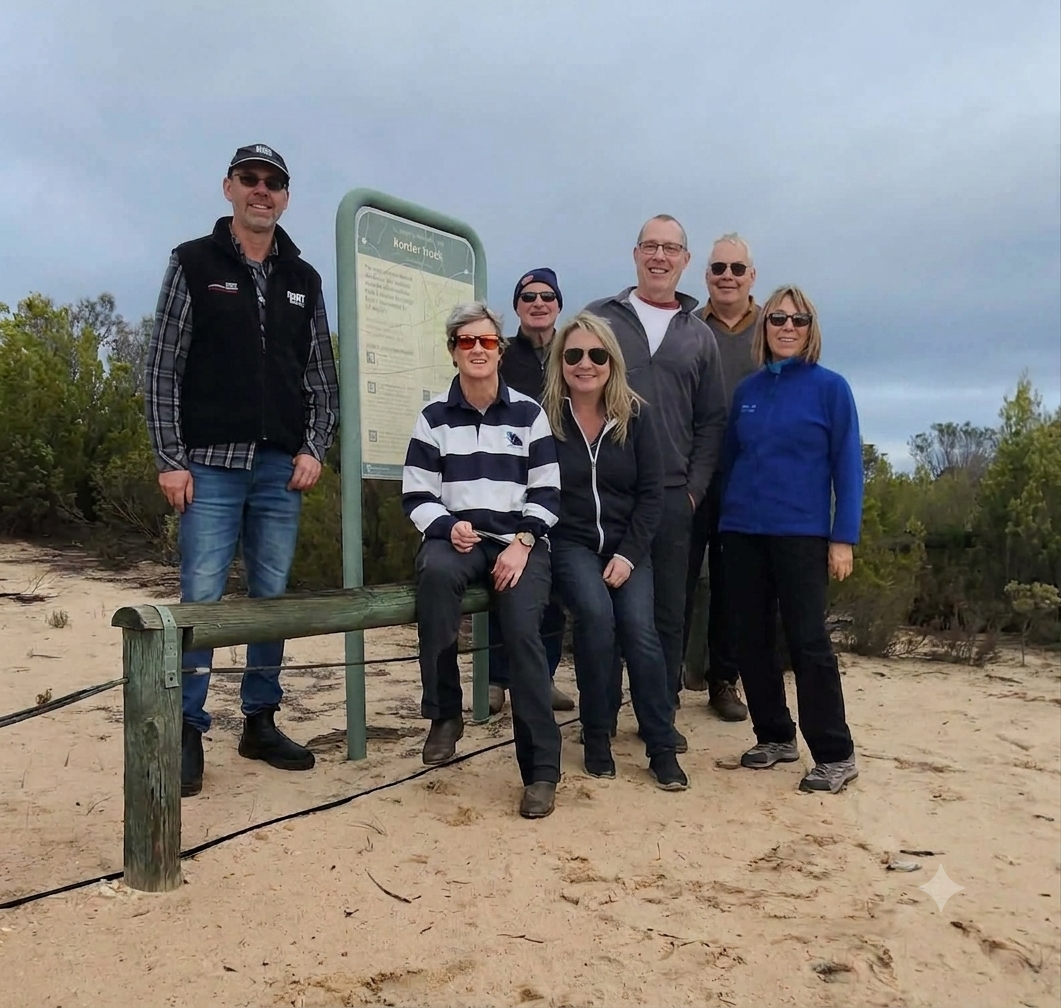
We’ve all heard stories of friendships being tested on long trips. Remote travel has a way of amplifying both strengths and weaknesses. Fatigue, unexpected breakdowns, changing weather and difficult recoveries can all place pressure on even the best-laid plans.
That’s why choosing the right travelling companions is one of the most important preparation decisions you’ll make.
One of the reasons we undertook the Border Track shakedown wasn’t simply to test our vehicles—it was to travel together as a convoy before committing to several weeks in some of Australia’s most remote country.
The weekend confirmed what we’d hoped. The convoy quickly settled into a comfortable rhythm. Everyone looked out for the vehicle behind them, decisions were made together, and when challenges arose, they became shared problems rather than individual ones.
Modern four-wheel drives and campers are incredibly capable, but they don’t make good decisions. People do.
No amount of equipment can replace good judgement, clear communication or a group that’s prepared to work together when conditions become difficult.
If we had to choose between travelling with the latest accessories or travelling with experienced, reliable people, we’d choose the people every time.
The Border Track Shakedown
No amount of planning can replace real-world testing.
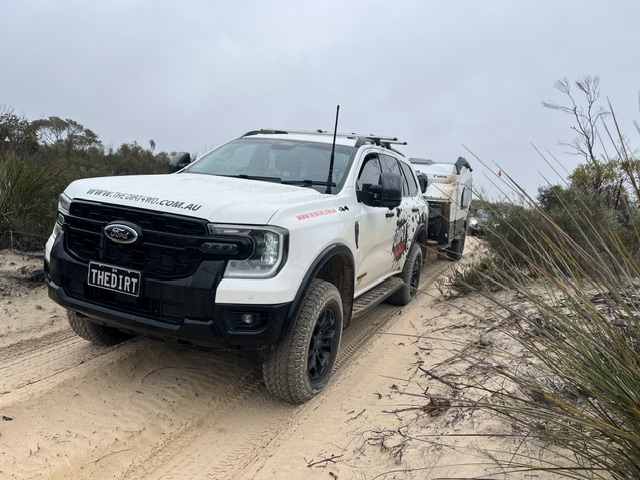
Our Border Track shakedown put months of planning to the test, helping us refine the Everest, Mk6 Tvan and our overall setup before tackling the remote deserts of Western Australia.
Our convoy was loaded as closely as possible to its planned Canning Stock Route configuration, including additional fuel, water and expedition equipment.
Our objective wasn’t simply to enjoy a weekend away—it was to answer a series of important questions before heading into one of Australia’s most remote regions.
We wanted to:
- Assess fuel consumption
- Confirm our packing systems
- Test communications equipment
- Refine tyre pressures
- Evaluate vehicle and suspension setup
- Practise convoy procedures and recoveries
- Identify problems before they became bigger problems
The Border Track proved to be the ideal testing ground.
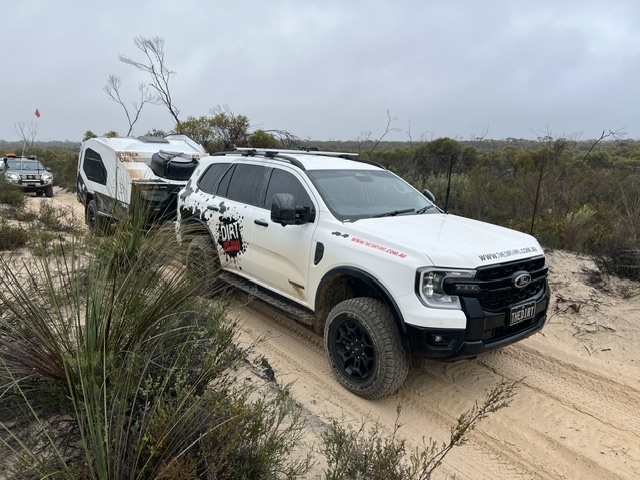
However, wet weather over the weekend left the sand more heavily compacted than we were hoping. There was still deep wheel ruts, alternating wombat holes and steep dune faces that challenged both vehicle setup and driver technique. It wasn’t identical to what we’ll encounter on the Canning Stock Route, but it provided a realistic opportunity to test our preparation under demanding conditions.
One lesson became obvious before we even reached the first dune.
On the morning of departure, I decided to make a last-minute adjustment to the BP-51 suspension settings. With the tyres already aired down, access to the adjusters was more awkward than expected and in my rush to rejoin the convoy I quickly realised that last-minute changes are rarely good ones.
Nothing went wrong, but I felt rushed and not relaxed for the kick off.
By the end of the day we’d achieved exactly what we’d hoped.
The Border Track had confirmed much of our preparation, highlighted a handful of areas that still needed refinement and, most importantly, given us confidence that both the Everest and Mk6 Tvan were heading in the right direction.
We’d much rather discover those lessons on the Border Track than hundreds of kilometres from the nearest workshop in the deserts of Western Australia.
Lessons from the Border Track
Perhaps the biggest lesson from the weekend was that preparation doesn’t finish when you leave home. Every kilometre taught us something, and every adjustment we make now is one less surprise we’ll face on the Canning Stock Route.
Tyre pressures really are everything
Despite all the time spent selecting suspension, accessories and equipment, the single biggest improvement came from lowering tyre pressures.
Running these pressures improved flotation, even in the wet sand and reduced wheelspin. It reinforced something we’ve long believed: tyre pressures remain the single most effective off-road modification you can make—and they don’t cost a cent.
For this trip we settled on:
- Everest Front: 14 psi
- Everest Rear: 16 psi
- Mk6 Tvan: 12 psi
Those pressures worked exceptionally well in the Border Track’s winter conditions and provide a solid starting point for further testing before the CSR.
Our packing system worked… mostly
One of our biggest questions before leaving home was whether everything would have a logical place.
Thankfully, it did.
Frequently used items were easy to access, nothing needed to be unpacked simply to reach something else, and we returned home with only a handful of minor improvements to make.
One change had already been made before we even left. We’d planned to carry an additional 60 litres of diesel in three roof-mounted containers, but after trialling the restraint system we weren’t completely satisfied with how they were secured. Rather than compromise, we left them behind.
Sometimes the best preparation decision is choosing not to take something until you’re completely confident it’s right.
Suspension tuning is still a work in progress
The Border Track confirmed that our BP-51 suspension setup is close—but not quite where we want it.
Over successive sand mounds we occasionally felt the front suspension top out, suggesting the rebound damping could be increased slightly. We also noticed a small amount of rear “pogo” while cresting dunes, something we’ll continue refining over the coming weeks.
Rather than making wholesale changes, we’ll continue making small adjustments, testing them and learning how each change affects the vehicle.
Sand Mode taught us a few things
One of the biggest benefits of the shakedown was learning more about how the Everest behaves in challenging sand conditions.
The wet, compacted dunes featured deep wheel ruts and alternating wombat holes that occasionally allowed a front wheel to lose contact with the ground. When that happened, wheelspin had a noticeable impact on momentum.
The rear differential lock proved invaluable on several climbs, while Sand Mode generally performed well by holding gears longer and relaxing traction control. We’ll continue experimenting with different settings to better understand when allowing some wheelspin is beneficial and when traction control may actually improve forward progress.
Understanding how your vehicle behaves is every bit as important as fitting accessories.
Fuel consumption confirmed our planning
The Border Track provided a useful benchmark for fuel consumption.
The off-road section returned 31.4 L/100 km, reflecting the additional load, low-range driving and soft sand in parts. This was considerably higher than a similarly loaded 200 Series and 150 Prado which was a surprise.
Putting it into context, the shakedown leg was a compressed series of dunes and not a representative sample of the entire Canning Stock Route which has a variety of conditions including flat claypans and longer touring legs in addition to the steeper, softer dunes. I expect the overall consumption to be lower than this and closer to the other vehicles.
By comparison, our highway journey to the campsite averaged 13.0 L/100 km.
Those figures will help refine our fuel calculations before heading into the more remote sections of the Canning Stock Route.
Small issues are exactly what a shakedown is for
The only damage from the weekend was a bent sand flag mount after it repeatedly clipped overhanging branches. Originally mounted on the left-hand side of the vehicle, it quickly became apparent that a centred mounting position would be much more practical, so we changed it during the trip.
It’s a small detail—but exactly the sort of thing you want to discover close to home rather than hundreds of kilometres from the nearest workshop.
The biggest success wasn’t mechanical
Perhaps the most reassuring outcome wasn’t the vehicle at all.
It was the confidence we gained.
Our packing system worked. The Everest and Mk6 Tvan performed exceptionally well. The convoy travelled comfortably together, and we returned home with a much clearer understanding of what still needed refining.
That’s exactly what a shakedown should achieve.
Every kilometre taught us something. Every adjustment we make now is one less surprise we’ll face in the remote deserts of Western Australia.
Know Your Vehicle Before You Need It
One of the biggest benefits of our Border Track shakedown wasn’t discovering what the Everest could do—it was learning how it behaved in different situations.
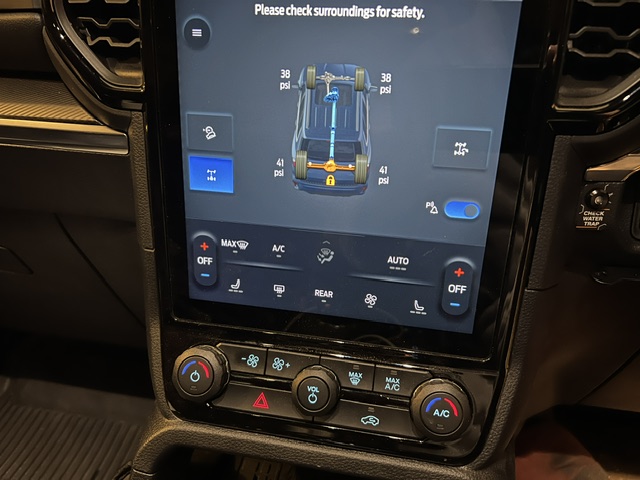
Features such as Sand Mode, traction control and the rear differential lock are incredibly capable, but they aren’t magic. Like any tool, they’re most effective when you understand what they’re doing and when to use them.
Our shakedown gave us the opportunity to see how the Everest responded in sand, deep wheel ruts and uneven dune climbs. It also reinforced that no electronic system replaces careful observation, appropriate tyre pressures and good driving technique.
The more familiar you become with your vehicle before heading into remote country, the more confident you’ll be when conditions become challenging.
Staying Connected
Communication is one of those things you hope you’ll never need—but when you do, it’s invaluable.
For the Canning Stock Route we’ll be carrying a GME XRS UHF radio for convoy communication and a Starlink Mini satellite system for internet access and emergency communication when outside mobile coverage.
While technology continues to improve, we still believe good convoy procedures remain the first line of communication. Simple habits such as maintaining visual contact with the vehicle behind, confirming turns and keeping the group informed are often more valuable than the equipment itself.
The Border Track reinforced just how important those habits are. Good communication kept the convoy moving efficiently and ensured everyone remained informed as conditions changed throughout the day.
Recovery Planning
Every remote trip requires recovery equipment, but carrying it is only part of the equation.
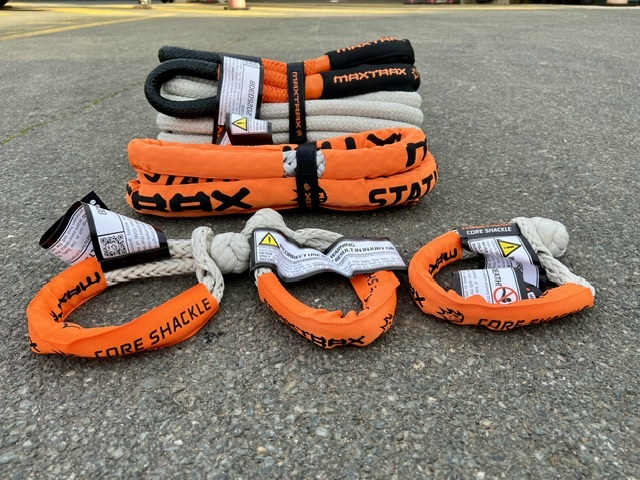
Recovery planning also involves understanding the terrain, communicating clearly as a group and recognising when to stop and reassess rather than pushing on.
Our Border Track shakedown gave us the opportunity to review our recovery equipment, practise convoy procedures and confirm that everything was accessible when required.
Fortunately, we didn’t need to perform any major recoveries—but knowing we were prepared provided valuable peace of mind before tackling the Canning Stock Route.
Follow the Journey
Preparing for the Canning Stock Route doesn’t end when the vehicle is packed.
Over the coming months we’ll continue sharing what we’re learning as we refine our setup, test our equipment and eventually head into the deserts of Western Australia.
Some of what we’ve planned will work exactly as expected.
Some of it won’t.
We’ll share both.
If our experiences help someone else prepare for their own remote adventure, documenting the journey will have been worthwhile.
About the Authors
Mike and Anita Pavey are the co-directors of The Dirt Off Road Campers in Mount Barker, South Australia.
Mike enjoys the technical side of remote-area travel, vehicle setup and expedition planning, while Anita documents the journey through her photography.
Together they have travelled some of Australia’s most iconic remote tracks, including the Anne Beadell Highway, Sandy Blight Junction Road and the Madigan Line. Through this series they’re sharing the planning, testing and lessons learned while preparing their Mk6 Tvan Murranji and Ford Everest Tremor for the Canning Stock Route.