Words by Mike Pavey | Photography by Anita Pavey & fellow travellers • 12 minute read
After six weeks and 8,731 kilometres through five of Australia’s great deserts, how did our Mk6 Tvan Murranji perform on the legendary Canning Stock Route? From punishing corrugations and soft sand dunes to scorching temperatures and remote desert camps, we share an honest account of what worked, what didn’t and what we’d do differently.
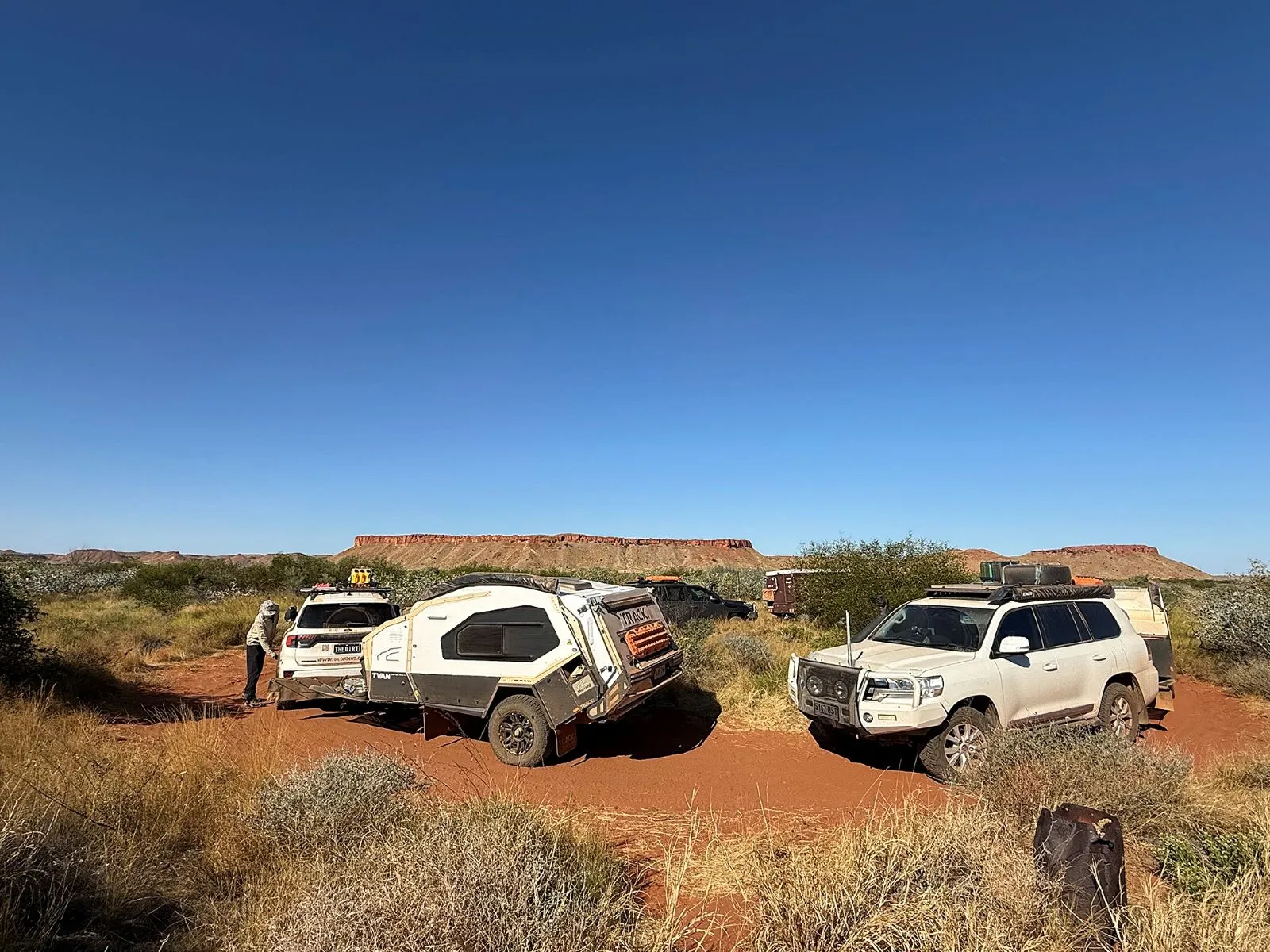
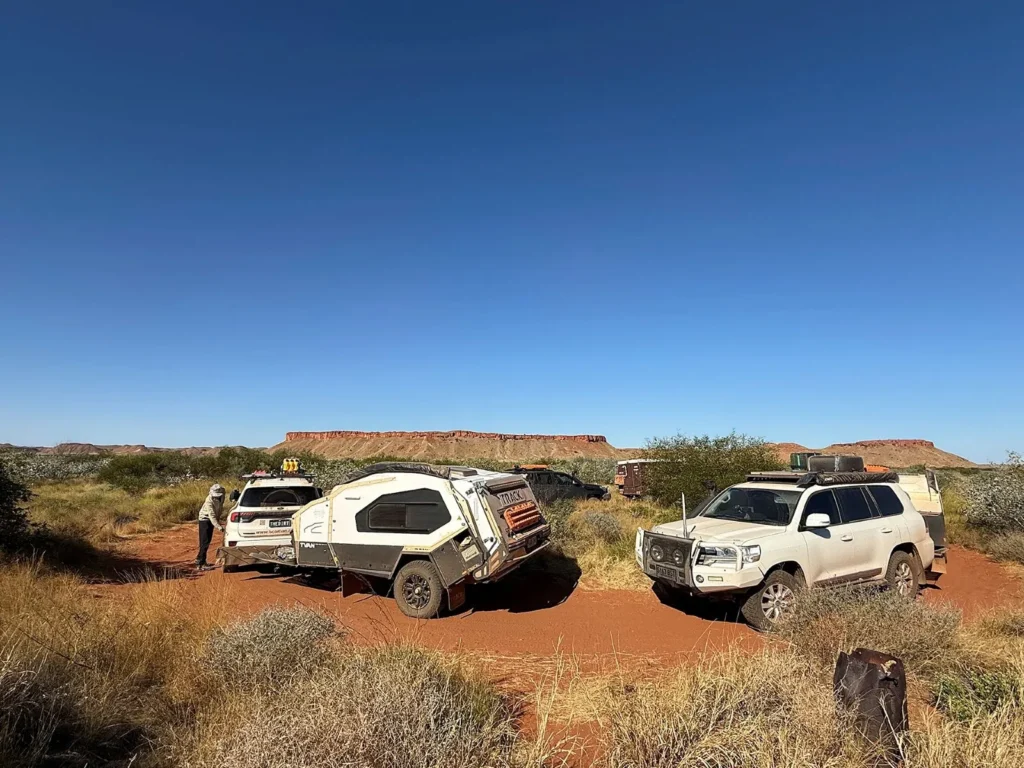
Well, it’s official – we conquered the Canning Stock Route and fulfilled a long-held aspiration to travel this iconic remote trek.
If you missed Parts 1 and 2, we explained why we chose the Mk6 Tvan Murranji for our six-week East Kimberley and Canning Stock Route expedition, and how we prepared the Tvan and our Ford Everest Tremor for the journey.
Despite watching just about every Canning Stock Route YouTube video we could find over the past 10 years, nothing really prepares you for experiencing it yourself.
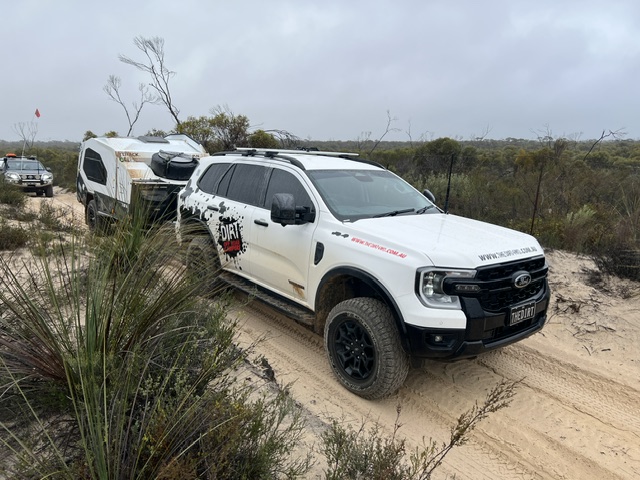
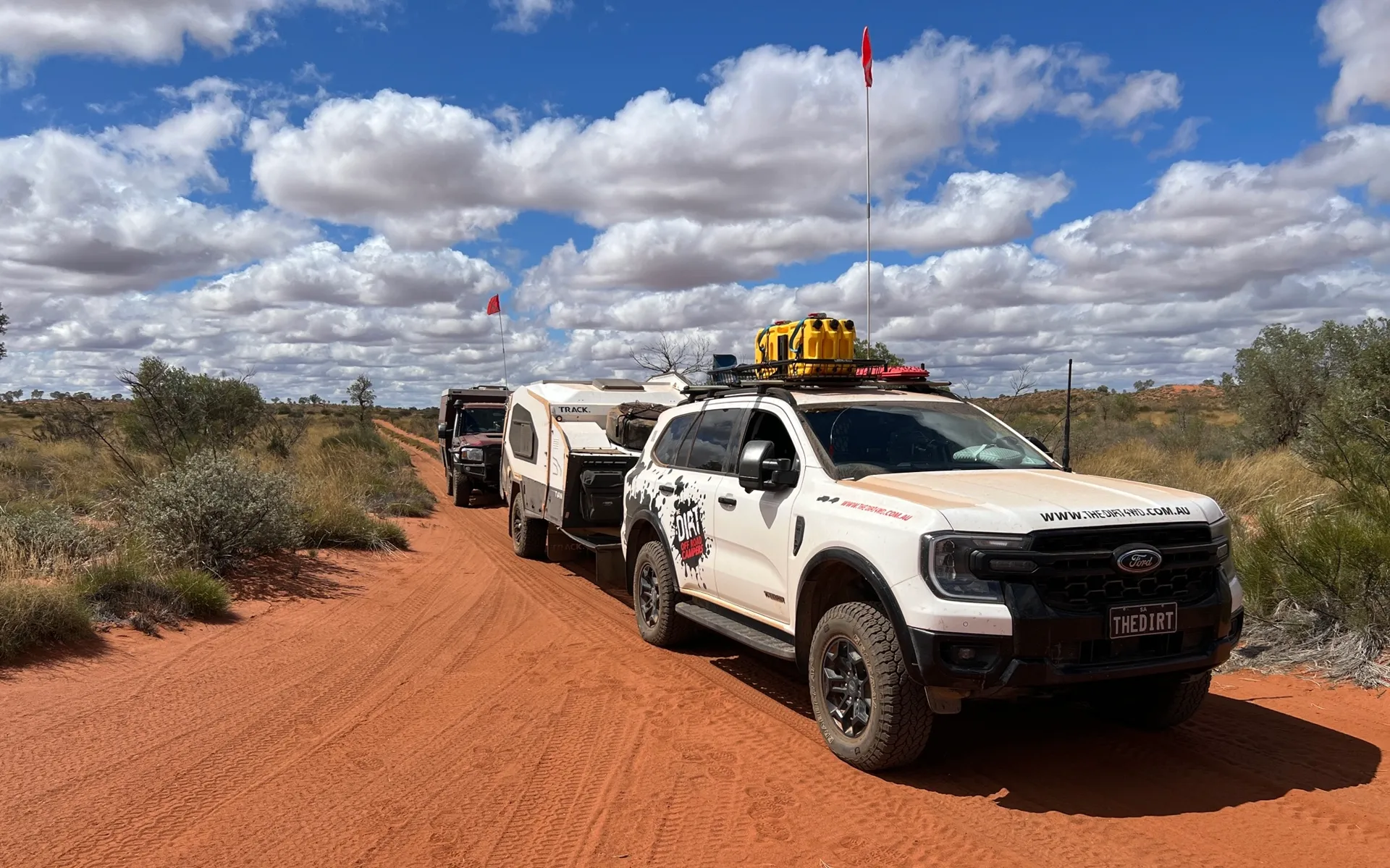
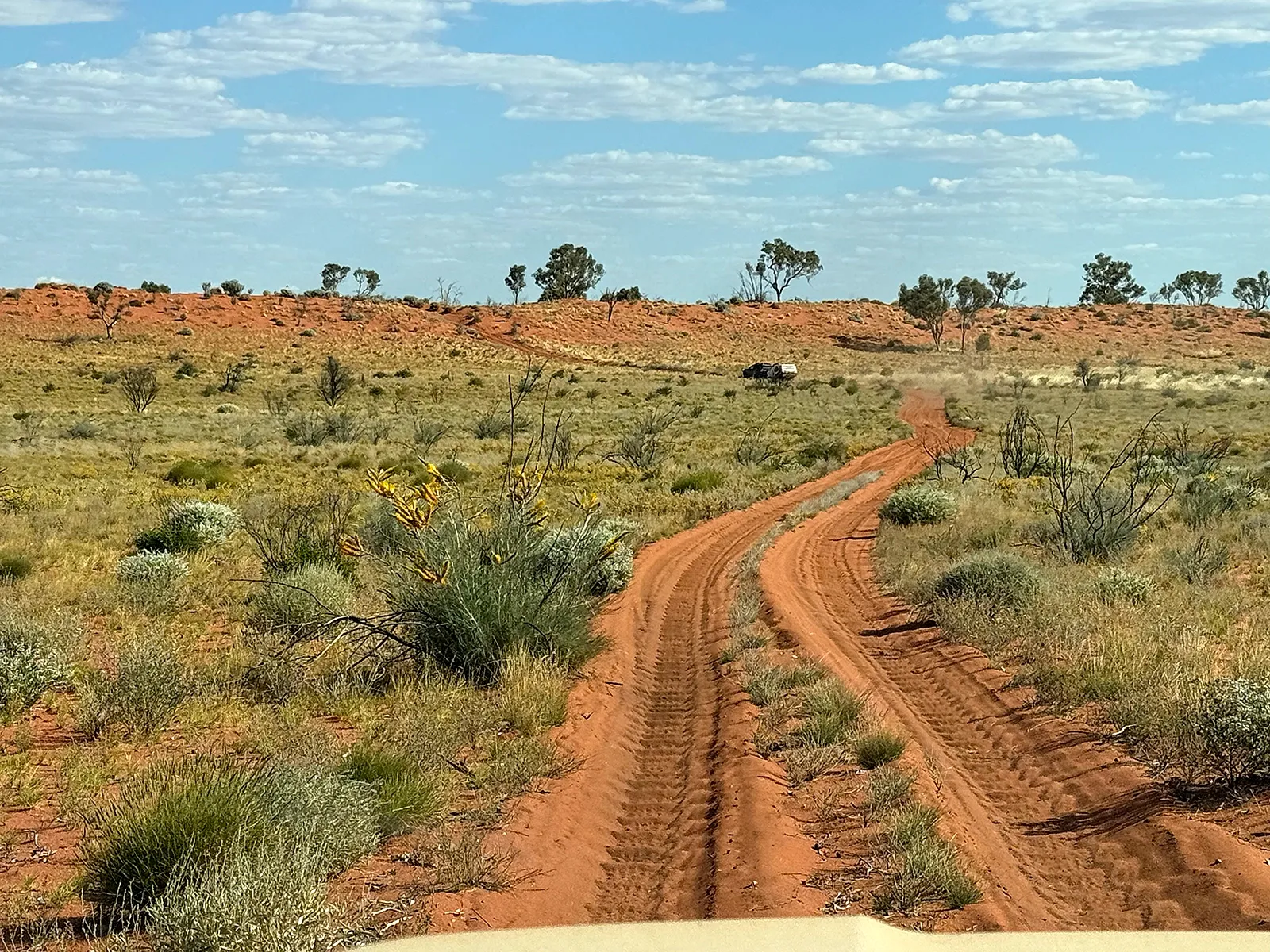
The heat came early this year, with temperatures regularly reaching 35°C and occasionally climbing even higher. There were relentless corrugations, long soft sand dunes, rocky outcrops, dusty tracks and surprisingly tight corridors where encroaching scrub brushed both the Everest and Tvan.
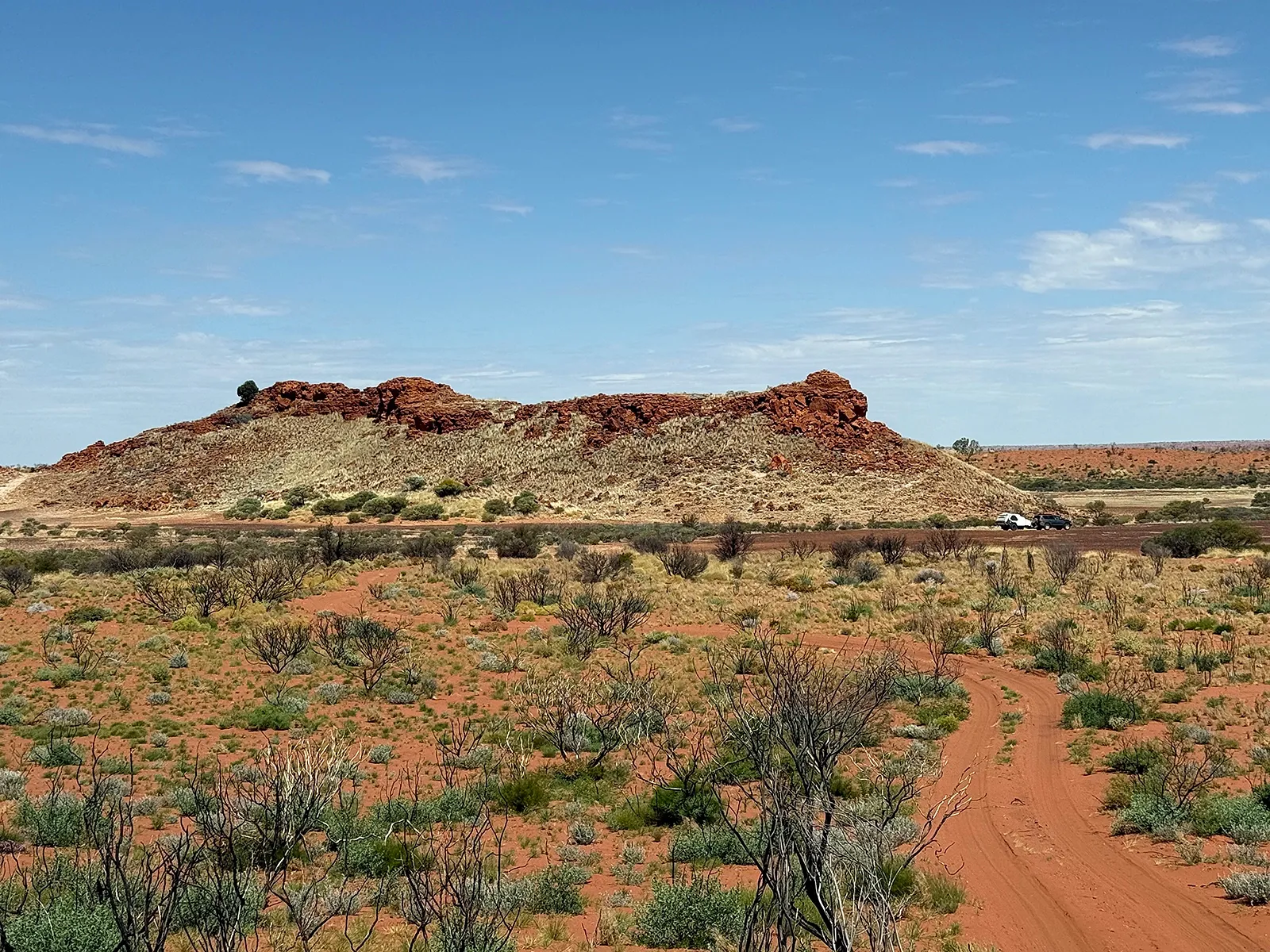
In complete contrast were vast open salt pans, including Lake Disappointment, colourful wildflowers and beautiful desert country that seemed to change around every corner.
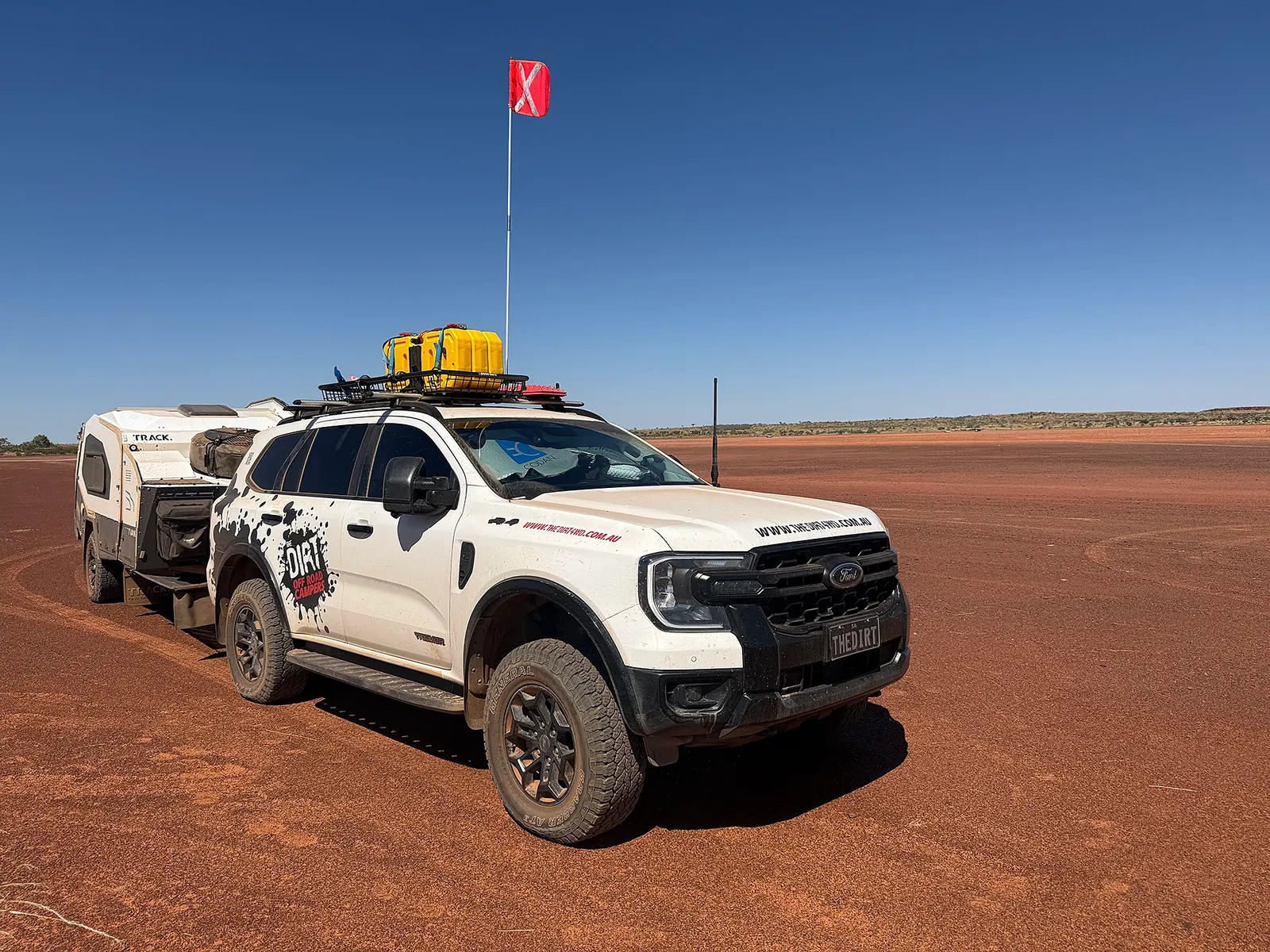
By the time we returned home, we’d travelled 8,731 kilometres through the Tanami, East Kimberley, Duncan Road, Canning Stock Route, Gunbarrel Highway and Great Central Road to Yulara. Along the way, we’d traversed five of Australia’s great deserts – the Tanami, Great Sandy, Gibson, Little Sandy and Great Victoria.
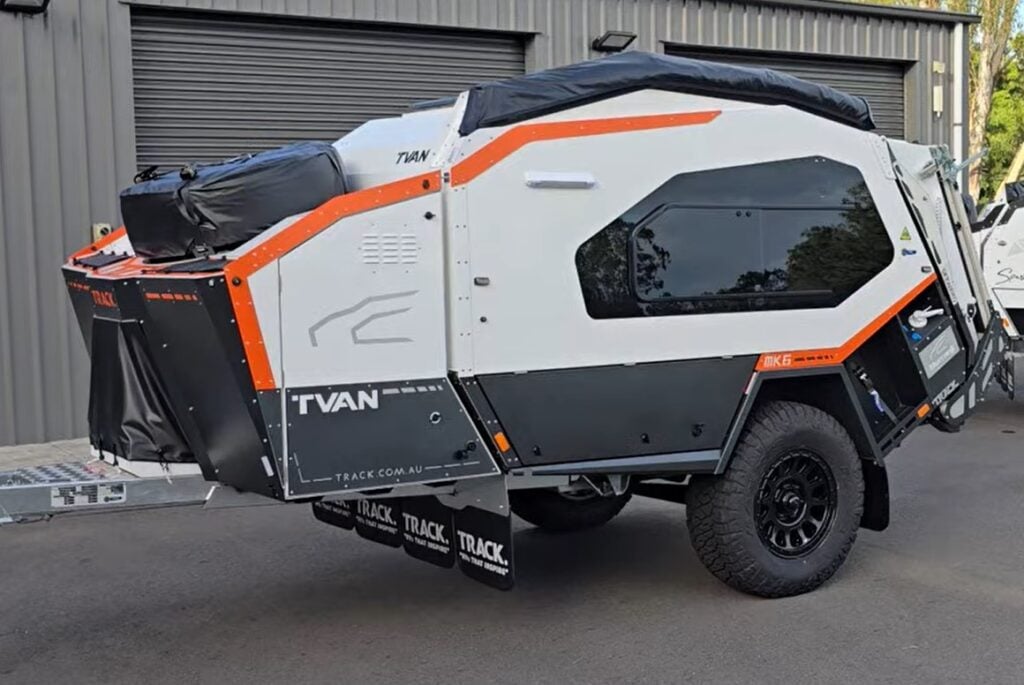
We’ve been travelling with Tvans for almost two decades, but the Canning Stock Route was an opportunity to put the latest Mk6 through one of the toughest tests we’ve undertaken.
So, how did it go?
In a word, brilliantly – and in some areas, beyond our expectations.
Despite corrugations that could only be described as brutal and relentless, the Tvan came through remarkably well. The suspension performed beautifully, the camper remained comfortable and practical to live in, and the list of things requiring attention was remarkably short.
Two screws worked loose around the RedVision display, and that was the extent of the corrugation-related issues we identified.
Even better, some of the earlier Mk5 wear points, such as the hard-floor deck hinges, have been improved on the Mk6 and came through the trip without complaint.
But there was much more to the story than simply surviving the Canning.
How the Tvan Handled the Corrugations
Before leaving, we decided to upgrade the Tvan’s shock absorbers.
We purchased a set of Koni 88 shock absorbers from Tristan Steinert at Atlas RV, one of the gurus when it comes to Tvan repairs, servicing and modifications. Tristan described them as premium, rebuildable shocks rather than something you simply throw away when a seal eventually fails.
We also considered the Radflo remote-reservoir shocks, but Tristan felt they were overkill for our application and better suited to someone intending to tackle rough tracks at considerably higher speeds. Based on his advice, we opted for the Konis.
To be fair, we’d never experienced problems with the standard Monroe DRiV shocks on our previous Tvans, including trips along the Anne Beadell Highway. But knowing the Canning’s reputation for punishing corrugations, we wanted to take things up a notch.
And we weren’t disappointed. The corrugations were often ankle-deep and a foot apart. Stop to secure a loose item on the roof rack, move off again, and you’d feel every rise and fall until reaching a speed where the suspension could begin working more effectively across the corrugations.
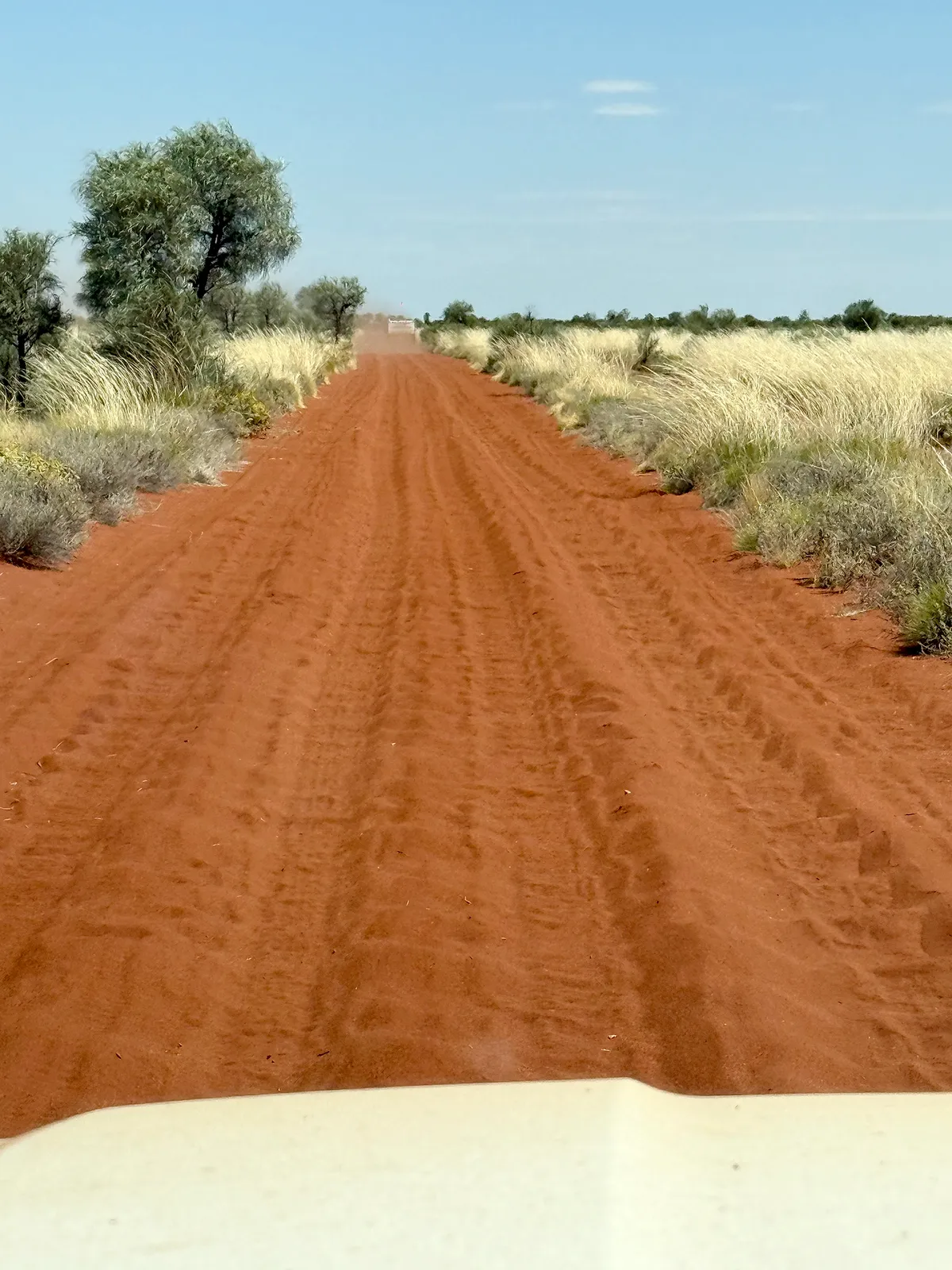
Where conditions allowed, that was often around 50–60 km/h. Of course, choosing an appropriate speed always depended on visibility, track condition, vehicle behaviour and what lay ahead.
The combination of Track Trailer’s long-travel MC2 suspension and the Koni 88 shock absorbers was outstanding.
At the end of the expedition, the shocks appeared to be performing just as well as when we left.
We’ve long had a motto when it comes to buying quality equipment:
Buy once, cry once.
Whether it’s premium shock absorbers or the Tvan itself, we’d rather invest in well-engineered equipment that stands the test of time.
Before leaving, we put our fully loaded Tvan over the weighbridge. It came in at 1,520 kg, which I thought was quite modest considering we were carrying additional diesel and equipment for a six-week expedition.
That relatively modest weight, combined with the suspension design, undoubtedly contributed to how well the camper handled the terrain.
The Tvan will be heading back to Track Trailer’s Outback HQ following the trip, giving the factory an opportunity to inspect how it has fared after some genuinely demanding remote touring.
I’m particularly interested in their observations.
Sand, Dunes and Towing
While the Tvan suspension impressed us, the Everest was another story.
Despite our Border Track shakedown trip and plenty of suspension tuning beforehand, the Everest’s performance on the CSR wasn’t what we’d hoped for.
The rear suspension seemed to run out of travel too quickly, and over certain bumps the rebound damping on the BP51 shockers struggled to control the resulting movement. Rather than settling after an impact, the rear of the vehicle would bounce from bump to bump, making for an uncomfortable ride.
It was particularly noticeable when cresting dunes and descending through the scalloped-out sections – those dreaded wombat holes that develop as vehicles struggle for traction.
Once the oscillation started, it could be difficult to settle, and the Tvan’s towball download appeared to magnify the effect.
Our suspicion is that the constant-load rear coils fitted as part of the ARB GVM upgrade may be contributing to the problem, with the suspension unloading over larger bumps faster than the shock absorbers can control.
That’s our observation rather than a confirmed diagnosis, and something we’ll be discussing with ARB.
We experimented with numerous compression and rebound settings throughout the trip but never found a combination that completely resolved the problem.
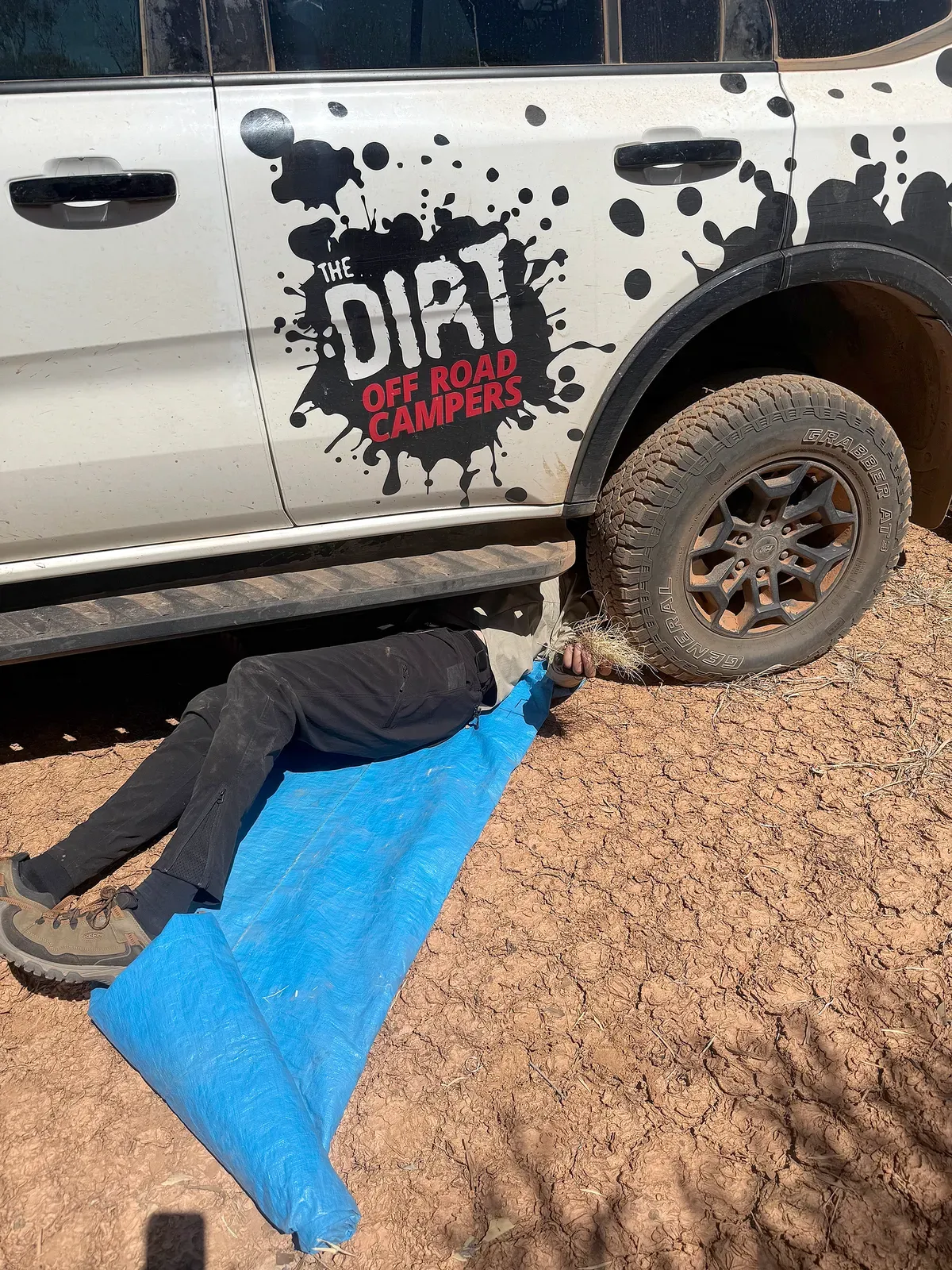
I spent a fair chunk of time underneath the Everest making adjustments – not the easiest job given the limited clearance and busy underpinnings, but increasing the airbag pressure for the adjustments made it easier.
Interestingly, other similarly loaded vehicles towing Tvans didn’t appear to suffer to the same extent.
We’re planning to work with ARB to understand what’s happening and whether changes to spring rates, damping or even custom valving might improve the result.
In complete contrast, the Tvan simply followed along behind.
Its long-travel MC2 suspension and Koni shocks soaked up the terrain, with the camper tracking beautifully behind the Everest.
It’s a credit to the design and heritage of the Tvan that it performs so well in this environment.
Tackling the Soft Dunes
With the early onset of hot weather, some of the dunes were exceptionally soft, occasionally requiring a second or even third attempt. And this wasn’t our first rodeo. We’d previously crossed the Anne Beadell Highway and tackled the Madigan Line with a Tvan in tow, so we weren’t exactly newcomers to soft sand and desert dunes.
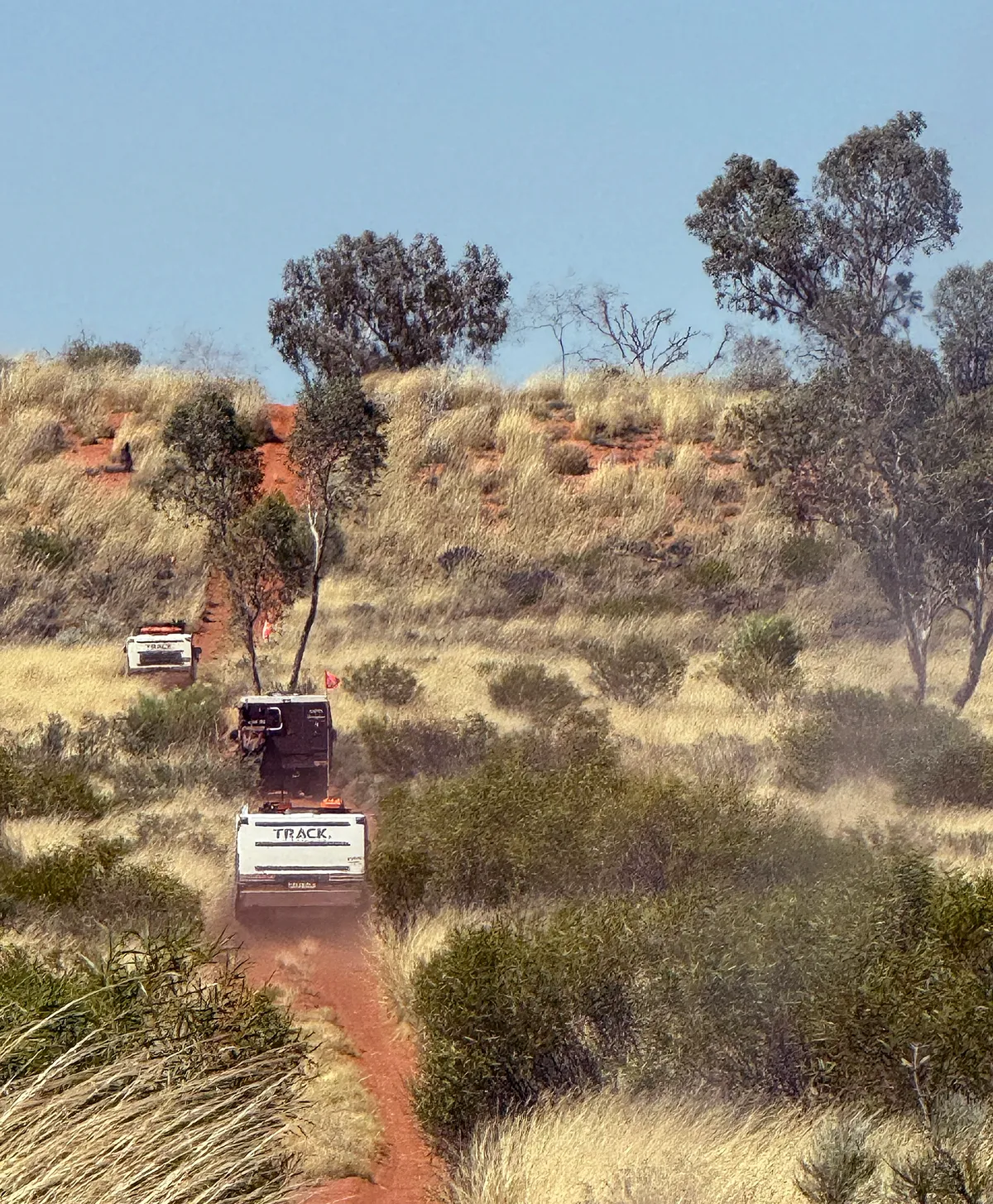
Travelling north to south, we found the southern faces of many dunes particularly scalloped out, with deep holes left by previous vehicles.
Our typical hot tyre pressures were around:
- Everest front: 16 psi
- Everest rear: 20 psi
- Tvan: 14 psi
These were pressures we used for our particular vehicles, loads and conditions, rather than a universal recommendation.
On a couple of occasions, the shovels came out to repair sections of track and smooth out holes before attempting a climb.
We also used Maxtrax near the crests of several dunes to provide that final bit of assistance. Having lanyards attached made retrieving the boards from soft sand much easier.
Remarkably, we didn’t need a snatch strap or winch throughout the crossing.
In the Everest V6, low-range fourth gear often provided the right combination of torque and momentum to ease over the dunes. On other occasions, high-range first and second gear worked better.
Sand Mode proved particularly useful, reducing traction-control intervention and allowing the vehicle to maintain momentum through soft sections.
With the limited rear wheel travel, engaging the rear differential lock when appropriate also helped maintain drive across uneven sections where a wheel might otherwise lose traction.
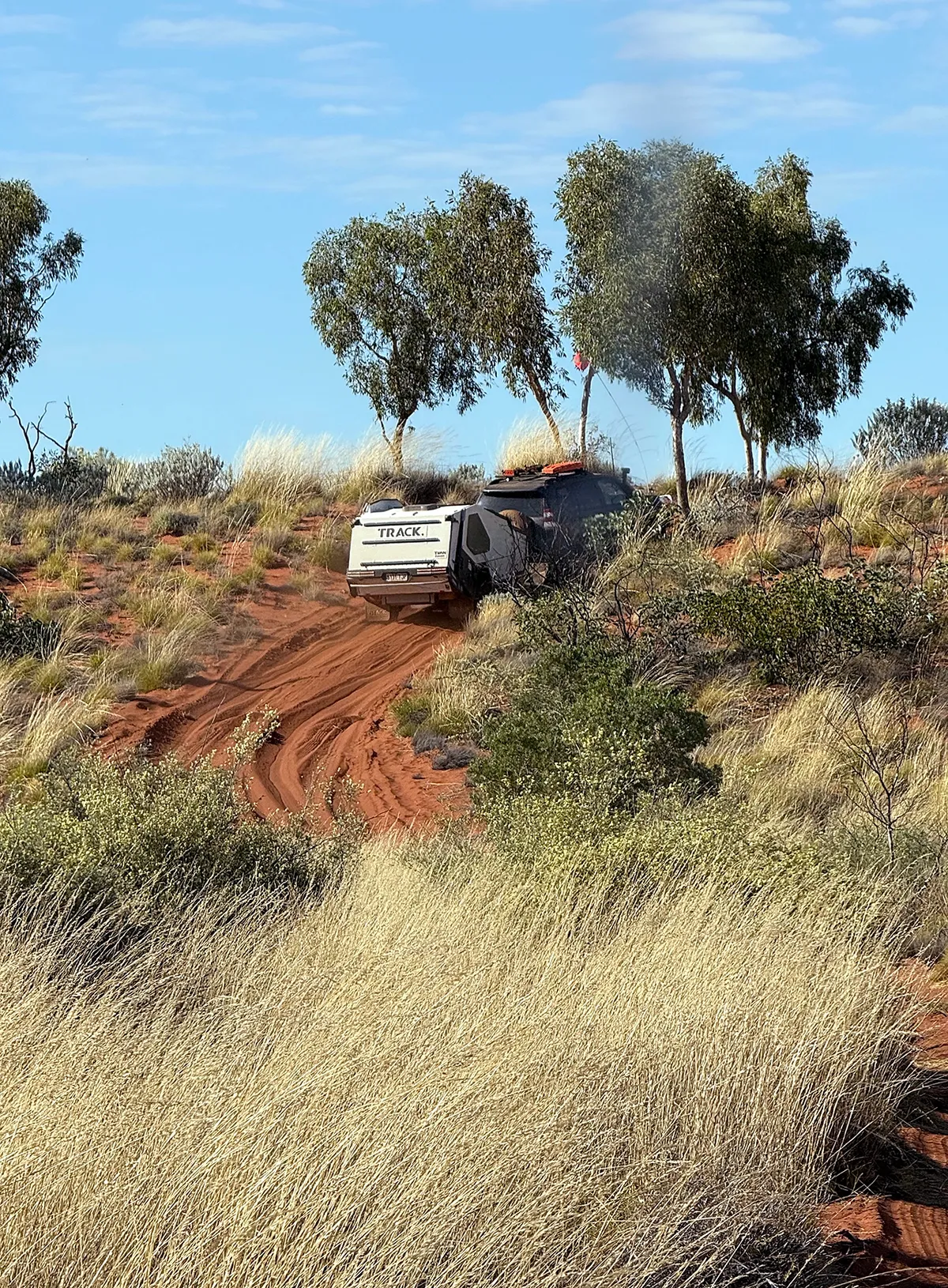
It was a good reminder that knowing how your vehicle’s systems behave is every bit as important as having them.
Tyres – and an Unexpected Difference
One of the more interesting observations from the trip was the difference in tyre temperatures.
We were running the stock General Grabber all-terrain tyres on the Everest and Falken Wildpeak AT4Ws on the Tvan.
Throughout the hotter parts of the day, the Everest’s rear tyre temperatures frequently hit 68°C, as indicated by the Ford tyre monitoring system.
We adjusted our driving approach to manage the temperatures, but increasing the rear tyre pressures made surprisingly little difference.
Other similarly loaded vehicles in the convoy were often reporting temperatures closer to 50°C.
The Falken Wildpeak AT4Ws fitted to the Tvan appeared to cope very well, although it’s important to recognise the considerable difference in loads between the trailer and the Everest’s rear axle.
We had deliberately fitted the AT4Ws to the Tvan as they were already on our shortlist as a future tyre upgrade for the Everest.
As it turned out, that decision was looking increasingly sensible.
Our only tyre casualty was a sidewall failure on one of the Everest’s rear tyres.
Whether prolonged heat contributed to the failure, we’ll never know.
We initially attempted a repair using a Gluetread patch, but after several wells the repair began leaking and we ultimately fitted the spare.
Interestingly, the Ford tyre pressure monitoring system didn’t sound an alarm. It was a faint smell of rubber that first drew our attention.
Since returning home, we’ve replaced the Everest’s tyres with the AT4Ws in a higher-load-rated specification better suited to our touring setup.
We’ll cover the tyre pressures, temperatures and lessons learned in more detail in a separate article.
Scrub and Paint Protection
One thing that genuinely surprised us was the frequency of narrow, scrub-lined corridors along the Canning. We also explored some lesser-travelled tracks off the CSR, where the vegetation was even more overgrown.
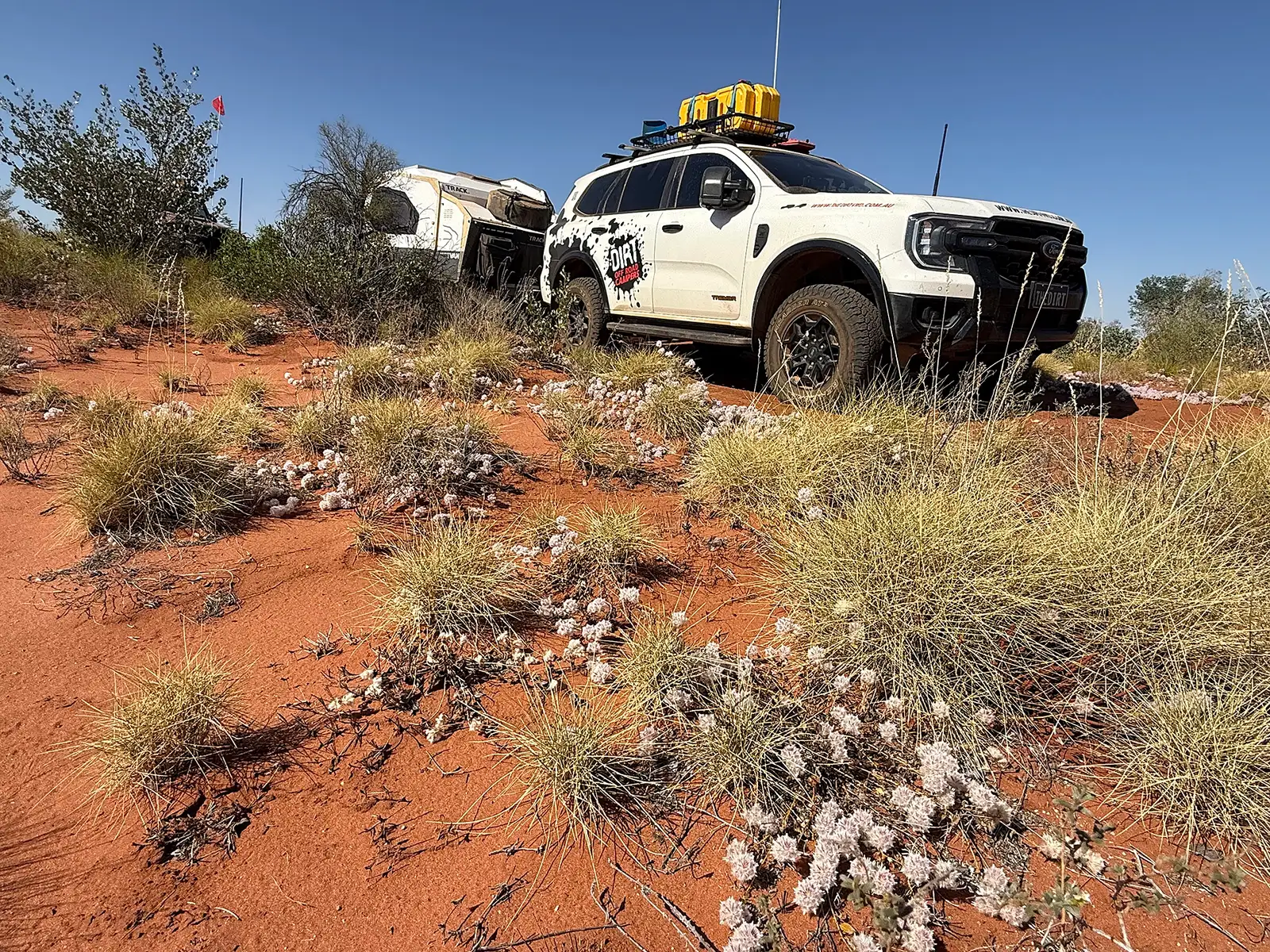
We expected some pinstriping, but there were sections where the scrub was constantly brushing against both sides of the Everest and Tvan.
And when you’re travelling through kilometres of it, there’s often nowhere to go.
Fortunately, we’d invested in paint protection before leaving.
For the Everest, we had a professional installer fit the Bushwrapz Advance paint protection film (PPF) using the vehicle-specific Tremor kit, along with some additional custom-cut sections.
We took a similar approach with the Tvan, purchasing a roll of Bushwrapz Advance PPF and having our installer create custom templates for the windows, side panels and selected forward-facing areas.
We also discovered Narrowtrax, a temporary paint-protection product designed for trips like the Canning.
This proved particularly useful on the Tvan’s exposed skeletal panels, where numerous rivets make conventional PPF installation difficult.
We also applied it to the stone guards and wheel arches.
The investment paid off handsomely, both in protecting the camper and preserving our sanity as the scrub brushed past.
There was plenty of learning involved in selecting, applying and removing the different products, so we’ll cover the whole experience in a separate article.
If you’re planning the CSR in a relatively new vehicle or camper, it’s a subject worth understanding before you leave.
Living With the Mk6 Tvan for Six Weeks
The Mk6 Tvan was an absolute joy to travel in.
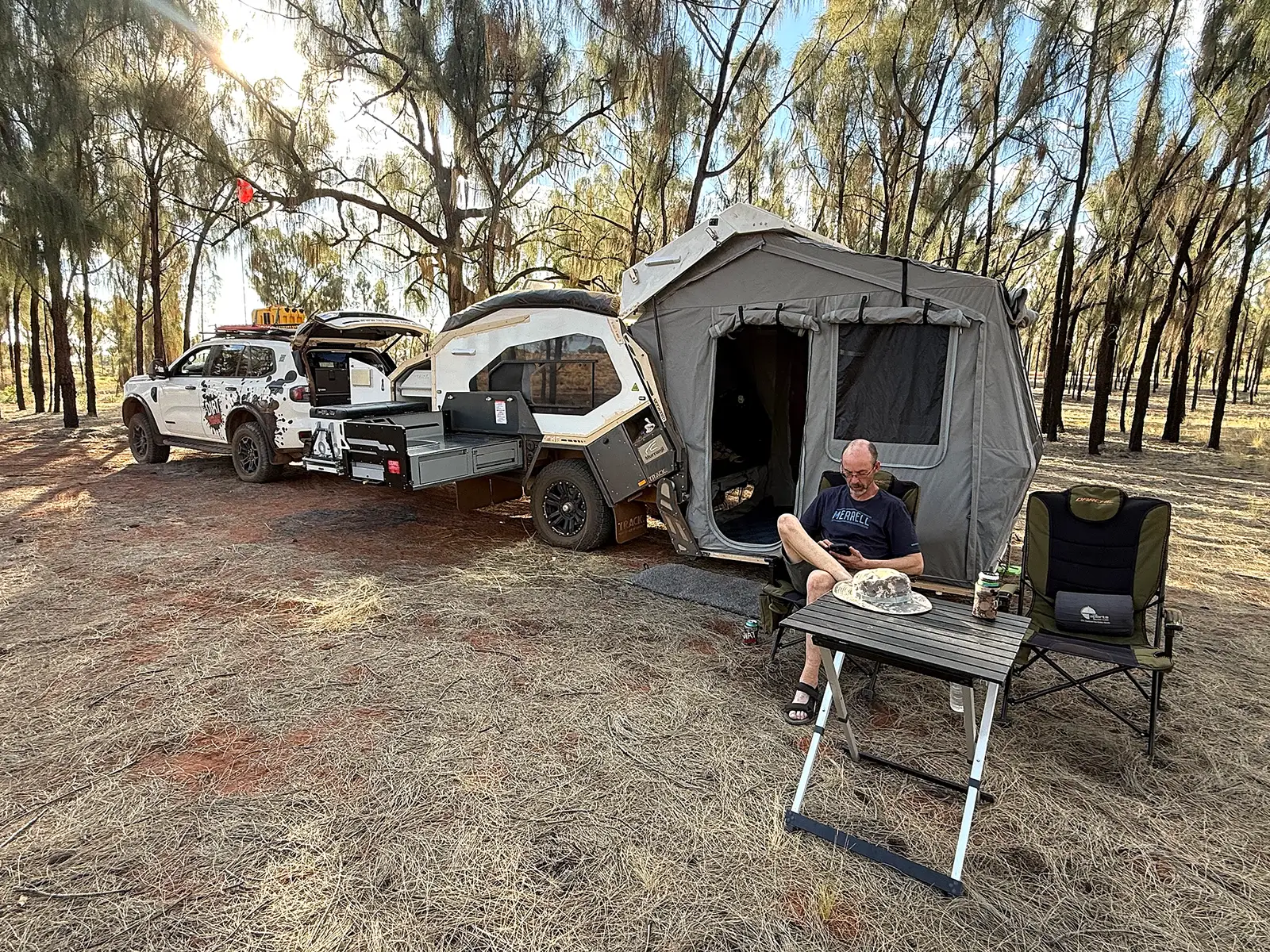
One of the things we’ve always appreciated about the Tvan is its simplicity.
Setup is quick and straightforward, without relying on electric actuators to deploy the main living areas.
While powered systems have their place, I prefer the simplicity of a largely mechanical setup when travelling in remote country. It’s one less system to worry about after thousands of kilometres of corrugations and dust.
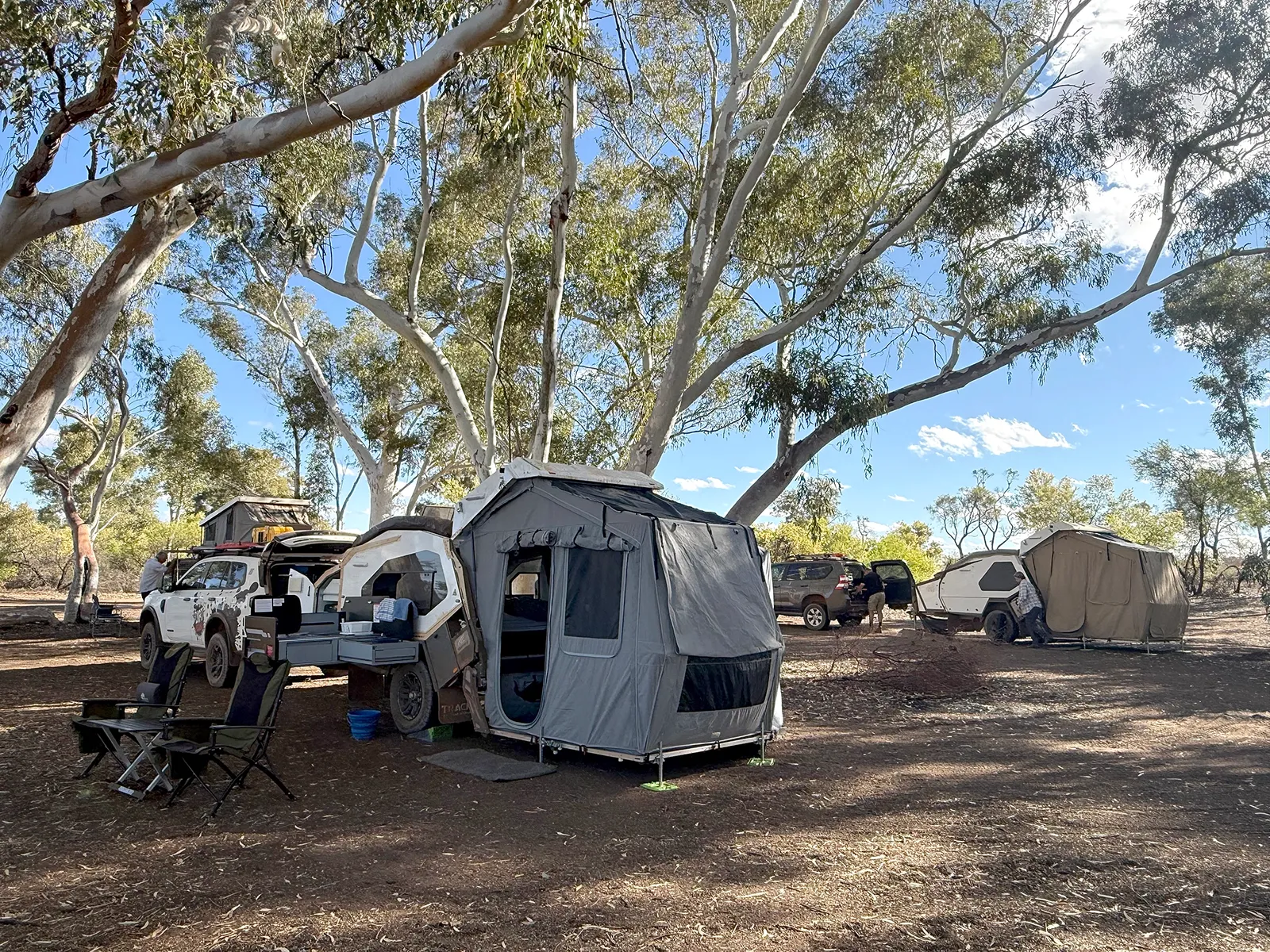
The increased cabin space in the Mk6 made getting in and out of bed noticeably easier, especially for Anita who is mobility impaired (MS), while the larger under-bed drawers improved storage and everyday access.
The bigger windows were another welcome improvement.
At picturesque camps such as Durba Springs and Pierre Springs, they really brought the outside in, allowing us to enjoy the surroundings even when relaxing inside the camper.
Keeping Comfortable in the Heat
With daytime temperatures regularly in the mid-30s, having a practical living setup made a real difference.
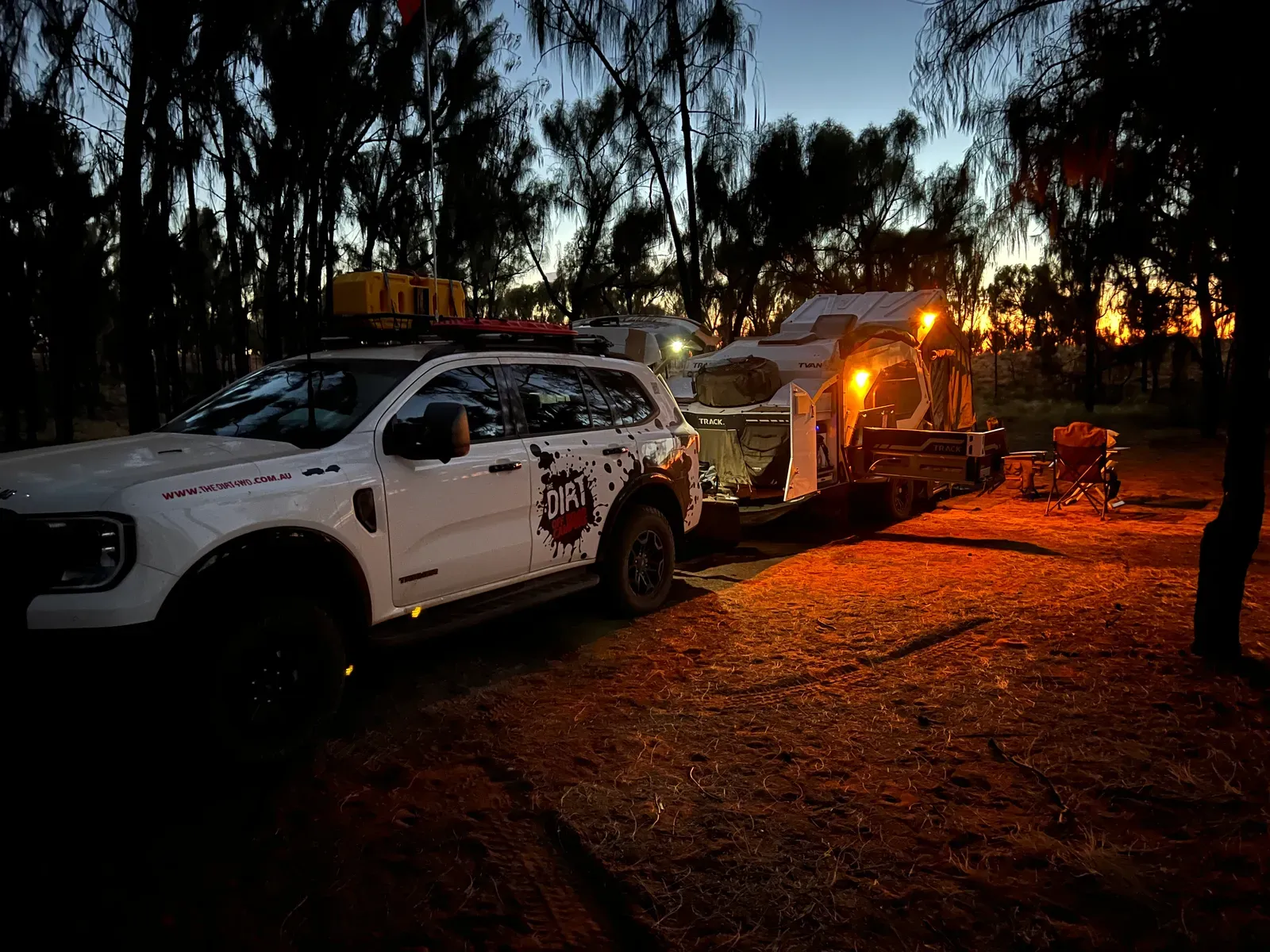
The ensuite provided a refreshing shower to wash away the day’s dust and sweat, while opening the windows and canvas panels, together with the fans, helped bring welcome airflow through the camper on warm nights.
The expanding hard-floor tent also gave us a useful private area for changing, showering and using the toilet without having to step outside into the elements.
It’s one of the Tvan’s greatest strengths.
For such a compact camper on the road, the additional living space when deployed makes it feel remarkably roomy.
The Premium Kitchen and Fridge
The Mk6 Premium Kitchen was another highlight. Carried over from the Mk5 Tvan, the generous preparation area, practical storage and easy access made meal preparation straightforward, even after a long day on the track.
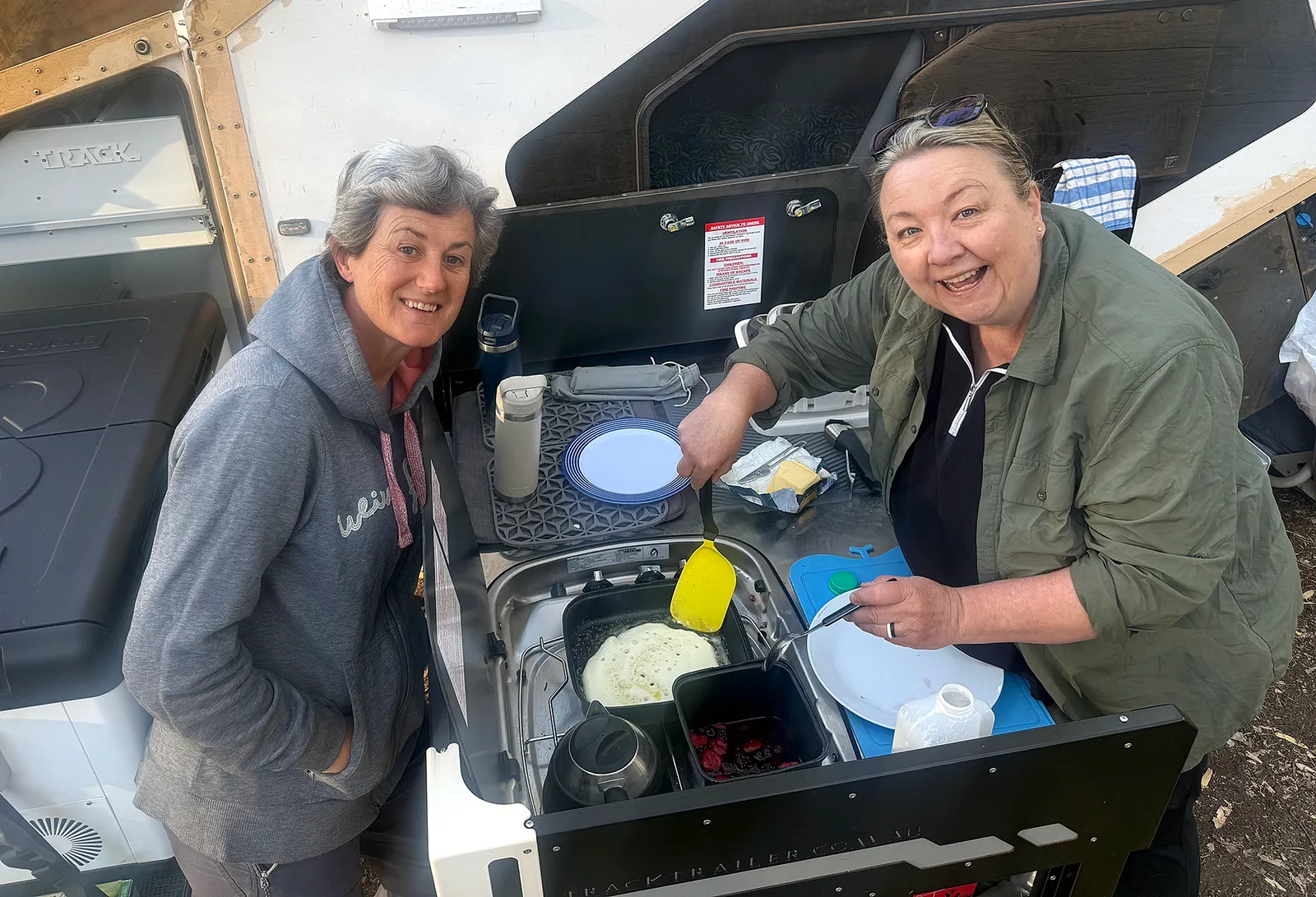
The larger pantry and 95L dual-zone fridge/freezer gave us plenty of capacity for food and supplies.
We even enjoyed the luxury of an ice cream after a 39°C day!
It’s little comforts like that which make extended remote touring so enjoyable.
And despite the larger living space and practical facilities, the Tvan remains compact and relatively light on the road.
That combination of size, weight and genuine off-road capability makes it particularly well suited to the Canning’s soft dunes, corrugations, rocky sections and narrow scrub-lined tracks.
Our Cuddy Composting Toilet
Our Cuddy portable composting toilet has become an important part of our touring setup.
During travel, it sits on the step at the base of the bed. When we set up camp, it’s quickly relocated to the corner of the hard-floor living area.
We purchased one of the early Cuddy units (2023) and have since upgraded several components as the product has evolved.
These include a redesigned solids bin with improved agitator arms, a cover to help contain the composting medium during mixing, and a carbon-filter venting arrangement that avoids the need for external venting.
We’ve also made a small base to raise the toilet a few inches, making it more comfortable to use.
For us, the biggest advantages are convenience, minimal odour and less time worrying about finding somewhere to empty a toilet.
Depending on use and conditions, we can generally go two to three weeks before emptying the solids bin.
That’s more time holidaying and less time dealing with toilet logistics. We consider that a win!
We stock the Cuddy at The Dirt Off Road Campers and have one on display in our showroom. We’re always happy to share our experience with anyone considering a composting toilet for their own adventures.
We’ve also written a detailed Cuddy review – read it here.
If you purchase through our online link, we offer free postage to your door.
Overall, the Cuddy gets a big thumbs up from us.
What Didn’t Work – and What We’d Do Differently
For all the things that impressed us about the Mk6 Murranji, six weeks of remote touring highlighted a couple of electrical upgrades we’d consider if preparing for another extended trip.
The biggest influence was the heat.
With the 95L dual-zone fridge/freezer working harder in the hot conditions, our battery reserves took a noticeable hit.
Occasional use of the hair dryer through the inverter made an impact, as would using a portable induction hotplate.
It wasn’t unusual to wake up with the battery state of charge below 70%.
And when temperatures were pushing towards 40°C, we naturally favoured shaded campsites beneath desert oaks or amongst the gums at places like Durba Springs.
Great for keeping cool, but not always ideal for solar production.
Fortunately, on most days we were back on the track the following morning, allowing the Redarc system to harvest available solar energy and supplement it with alternator charging while travelling.
The existing system did the job, but with the benefit of experience, there are two changes I’d make.
More Battery Capacity
Revolution, Track Trailer’s battery supplier, has recently introduced an upgraded 188Ah lithium battery with a similar footprint to the standard 125Ah unit.
That provides the opportunity to increase the Murranji’s dual-battery capacity to 376Ah.
For extended remote travel, that additional reserve would be very welcome, particularly when the fridge is working hard and solar conditions aren’t ideal.
It’s the battery configuration I’d choose if ordering our Murranji again.
Faster Charging
If you’re a heavy power user, particularly if you’ve opted for the 2000W inverter, the second upgrade we’d recommend is moving from the Redarc Manager30 to the Alpha50 charging system.
The Manager30 served us well, but the Alpha50’s higher charging capacity offers the potential to replenish your batteries considerably faster, provided the available input and battery system can support it.
That’s particularly useful if you’ve upgraded to the larger 376Ah lithium battery bank and regularly use high-draw appliances such as a hair dryer or induction cooktop.
That could be particularly valuable for owners who like to move between campsites with only a few hours of driving each day.
More battery capacity is useful, but being able to replenish that capacity efficiently is just as important.
We have a Redarc 160W portable solar panel with custom mounts that allow it to attach directly to the Tvan’s rear hatch. It can also be positioned separately in the sun while the camper remains in the shade — particularly useful when temperatures are pushing towards 40°C. We used this during the day when we camped at Durba Springs for three nights.
The portable solar gives us flexibility when camping, but the two improvements we’d make are increasing our battery capacity to 376Ah and upgrading to the Redarc Alpha 50 for faster charging.
Neither upgrade was essential to completing our trip. They’re simply refinements we’d make now that we’ve lived with the camper in demanding conditions for an extended period.
Apart from those observations and the two loose screws around the RedVision display, there wasn’t much to complain about.
Would We Choose the Mk6 Tvan Again?
Before we left, we believed the Mk6 Tvan Murranji was the right camper for the trip.
After 8,731 kilometres, including the Canning Stock Route, East Kimberley and five deserts, we don’t have to speculate anymore.
In my mind, the Tvan has always been one of the ultimate adventure campers, and this expedition only reinforced that belief.
It’s the combination of purposeful design, proven suspension, compact dimensions and genuinely usable living space that sets it apart.
There aren’t many compact off-road campers that offer a protected sleeping compartment, a proper kitchen and an expanding hard-floor living area where you can stand up, get changed or escape the weather.
The Mk6 improvements – increased headroom, larger windows, better storage and refinements to the overall design – have made an already capable camper even more enjoyable to live with.
And after some of the roughest tracks we’ve experienced in years, that’s a pretty convincing result.
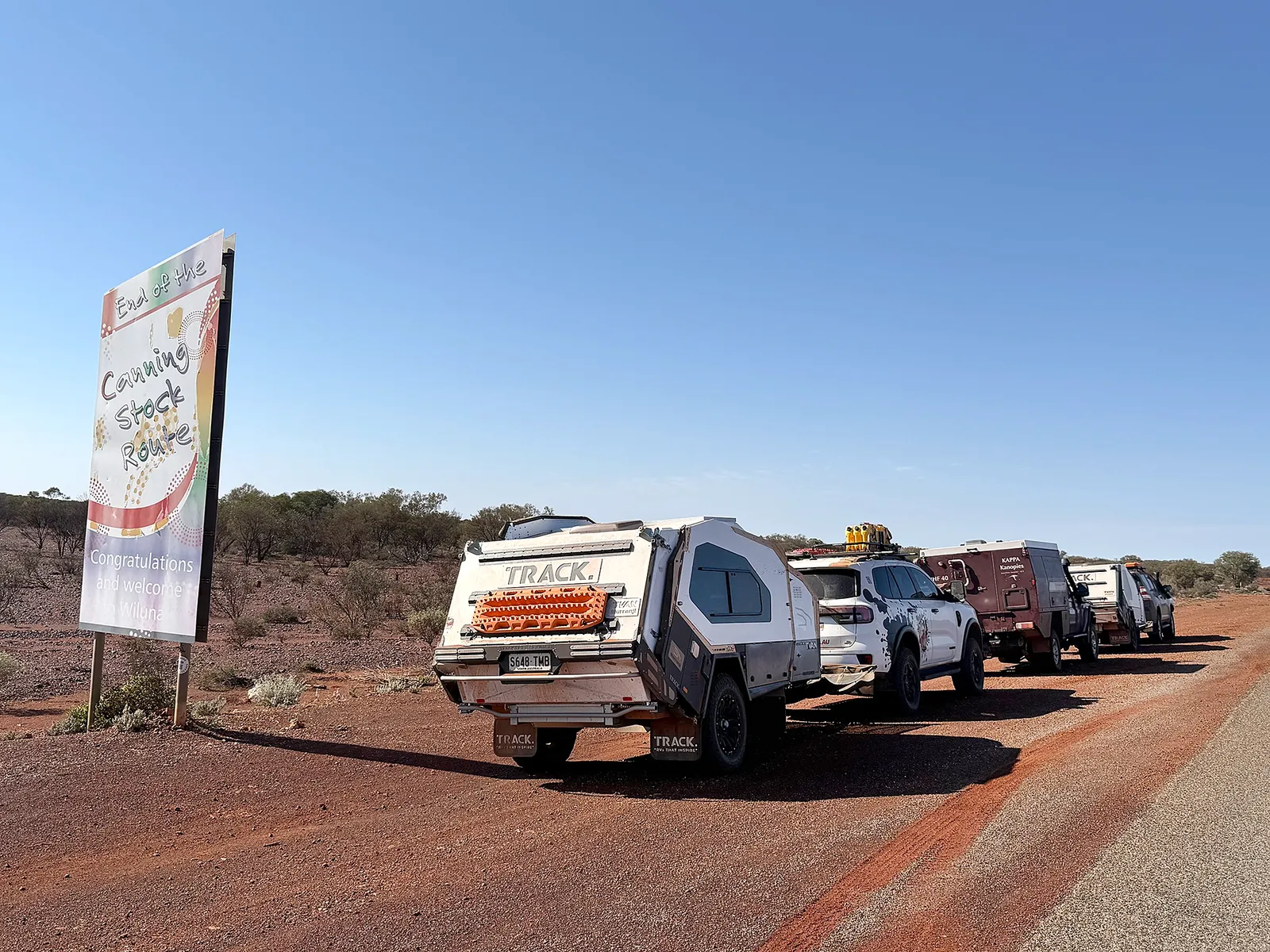
Would we choose the Mk6 Tvan Murranji again? Absolutely!
There are a couple of electrical upgrades we’d make, but the fundamental design and capability of the Tvan proved themselves over and over again.
That’s exactly what we wanted to find out when we set off on this adventure.
See Our Canning Stock Route Adventure in Pictures
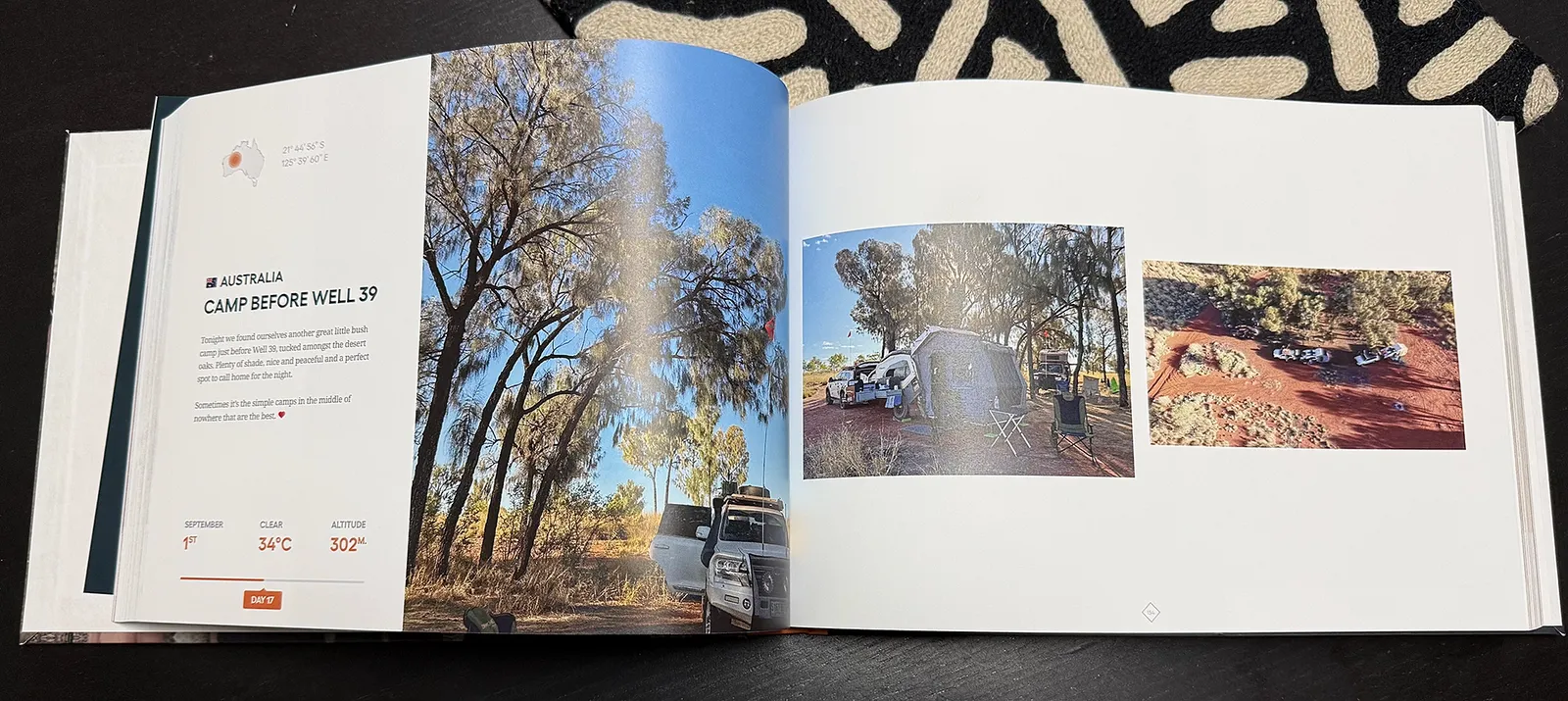
We’ve also put together a photo book documenting our six-week adventure through the East Kimberley and Canning Stock Route.
At over 280 pages, it’s a collection of our favourite photographs capturing the spectacular desert landscapes, remote campsites, challenging tracks and memorable moments along the way.
The book is available to browse at The Dirt Off Road Campers in Mount Barker. If you’re planning your own Canning Stock Route adventure, researching the Mk6 Tvan or simply enjoy remote Australian travel, you’re welcome to drop in and have a look.
October Special – Tvan Murranji CSR Upgrade Pack
Having completed the Canning Stock Route, we’ve put together a package combining the upgrades we’d make with the equipment that proved its worth on the trip.
To celebrate the adventure, we’re offering a special CSR Upgrade Pack valued at $3,050, included at no additional charge with eligible new Mk6 Tvan Murranji orders placed through The Dirt during October 2026.
Inspired by what we learned during our expedition, the package includes:
-
Revolution 376Ah lithium battery upgrade – $1,200 value
-
Redarc Alpha 50 charging system upgrade (from Manager30) – $1,000 value
-
Additional Redarc 160W portable solar panel, with custom rear-hatch mounting provision – $850 value
Combined with the Tvan’s standard 200W roof-mounted solar panel, this increases the total available solar capacity to 360W, with the flexibility to position the portable panel in the sun while the camper remains in the shade. It also can be clipped direct to the hatch using the custom mounts.
Total bonus value: $3,050
It’s an opportunity to benefit from our real-world experience, with greater battery capacity, upgraded charging and additional solar included at no extra charge.
The offer is exclusive to the Mk6 Tvan Murranji – the very model we took across the Canning Stock Route.
Available on eligible new orders placed with The Dirt Off Road Campers by 31 October 2026.
Contact mi**@************om.au or 0432 320 650 to discuss the Murranji and the CSR Upgrade Pack.
Offer valid on new Mk6 Tvan Murranji orders placed with The Dirt Off Road Campers during October 2026. Includes the advertised upgrades at no additional charge. Not redeemable for cash. Cannot be combined with any other offer.
Explore Our Canning Stock Route Series
Our six-week expedition through the East Kimberley and Canning Stock Route covered 8,731 kilometres and five of Australia’s great deserts.
Across this three-part series, we share why we chose the Mk6 Tvan Murranji, how we prepared for the journey and what we learned from putting it to the test in some of Australia’s most demanding remote country.
-
Part 1 – Why We Chose the Mk6 Tvan for the Canning Stock Route – Our reasons for choosing the Mk6 Murranji for this adventure.
-
Part 2 – How We’re Preparing Our Mk6 Tvan for the Canning Stock Route – Our planning, equipment choices, vehicle preparation and Border Track shakedown.
-
Part 3 – How the Mk6 Tvan Performed on the Canning Stock Route – Our honest assessment of what worked, what didn’t and what we’d do differently.
If our experiences help someone else prepare for their own remote adventure, sharing the journey will have been worthwhile.
Previous Desert Adventures
The Canning Stock Route wasn’t our first remote desert adventure with a Tvan. Our experiences on other challenging outback tracks helped shape our preparation, equipment choices and expectations for this trip.
You can read about some of our earlier adventures here:
Thinking About a Tvan?
About the Authors
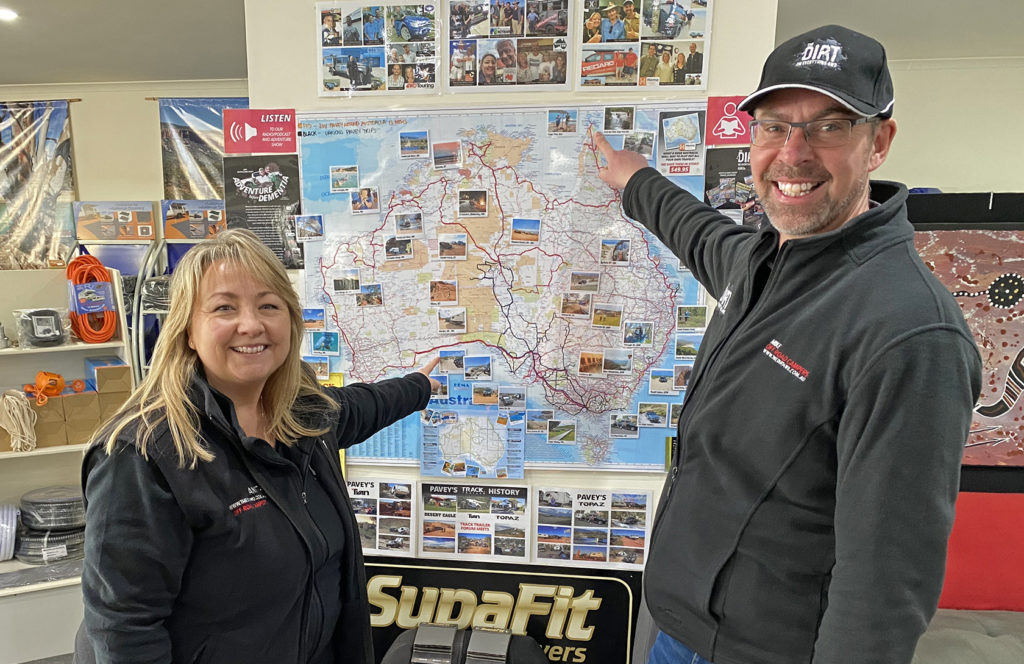
Mike and Anita Pavey are the co-directors of The Dirt Off Road Campers in Mount Barker, South Australia.
Mike enjoys the technical side of remote-area travel, vehicle setup and expedition planning, while Anita documents the journey through her photography.
Together they have travelled some of Australia’s most iconic remote tracks, including the Anne Beadell Highway, Sandy Blight Junction Road, Madigan Line and, most recently, the Canning Stock Route.
Through their articles, they share first-hand experiences, practical advice and lessons learned from travelling through remote Australia.